Serving Manhattan, KS & nearby
(785) 203-9720
Manhattan, KS

What a Service Call Actually Covers in Manhattan

A plain look at when to call, what a service call covers, and how Manhattan's 1960s-70s housing stock and cold winters shape garage door repairs here.

A technician in a blue uniform and gloves reaches into an open toolbox in a garage.

When to Call Someone

If the door won't move and the opener light is blinking, that's usually a safety sensor out of alignment, not a motor problem - a tech can often clear that in minutes. If the door is stuck halfway and the springs look stretched or one side hangs lower than the other, stop trying to force it with the wall button. That's a broken or weakened torsion spring, and on a double-wide door that spring is holding real weight.

Most of the houses we get called to around here went up between 1966 and 2007, with the bulk of that stock dating to the 1960s and 70s across the seven main residential areas in town. That matters because a lot of those original doors still run on hardware from the original install - galvanized torsion springs and steel tracks that were fine for forty years and are now due. If your door is original to a house built in that window, don't wait for total failure. A spring that's visibly sagging or a track that's pulled from the wall bracket is a call-now situation, not a next-month one.

If the door opens and closes fine but makes noise, that can usually wait for a scheduled visit rather than an emergency one.

What You Pay

We don't publish a flat number here because what you pay depends on what's actually wrong and what's on the door - a cable replacement and a full spring-and-cable job on a double door are not the same call. What we can say is how the age of the housing stock affects the bill. A house built in the 1966-2007 window, especially the 1960s-70s majority across Manhattan's established areas, often still has its original torsion spring system or a first-generation opener. Parts for that generation aren't always on the truck; sometimes we're ordering a spring sized to older torsion hardware rather than pulling one off the shelf.

Newer openers and doors, installed in the past couple of decades, tend to use more standardized parts, so those jobs usually move faster and cost less in parts time. If your house falls in the older end of that build range, ask up front whether the fix is a stock part or a special-order one - it changes the timeline more than it changes the base labor.

The honest limitation: if a door is old enough that the track, springs, and panel all need work at once, replacement is usually cheaper than three separate repairs stacked on top of each other. We'll tell you when that math favors a new door instead of chasing the old one.

How Local Conditions Play In

  1. Manhattan sits in a cold, moderate climate band, and that shows up in specific ways on a garage door

    Steel tracks contract in hard cold, which is when a door that was already slightly out of alignment starts binding or jumping the roller. Nylon rollers get brittle faster in repeated freeze-thaw than in a mild climate, and that's a common cause of the grinding noise we hear about on winter service calls.

  2. Extension and torsion springs also lose a bit of tension in cold steel

    So a spring that was borderline in October can fail in January under the same load it handled fine all summer. That's not a defect, it's just what cold does to loaded steel, and it's why late-fall is a reasonable time to have an older spring looked at before the cold sets in rather than after a door won't lift one morning.

  3. We don't see the kind of coastal humidity or wind-driven debris issues that shape service calls in other climates

    This is a cold-cycle problem more than a corrosion problem for most doors here.

The Problem

The actual problem on most calls in Manhattan isn't dramatic - it's a torsion spring that's past its rated cycle count on a door installed sometime in that long 1966-2007 build window, carrying an opener that's been asked to do more lifting than it was rated for as the spring weakens. The opener motor strains, the gears wear, and homeowners often replace the opener first because it's the part making noise, when the spring was the root cause.

Across the households we serve - a mix of owner-occupied houses spread through Manhattan's established neighborhoods - the pattern repeats often enough that it's the first thing we check on an older door that's acting sluggish: is the spring still doing its job, or is the opener fighting it. Fixing the opener without touching a tired spring just means a shorter life on the new opener too.

We don't do cosmetic panel matching on older discontinued door models - if a single panel is dented on a door old enough to be out of production, we'll tell you straight whether a close-enough panel is available or whether the practical fix is a full replacement.
How it works

From “it’s stuck” to “it’s fixed”

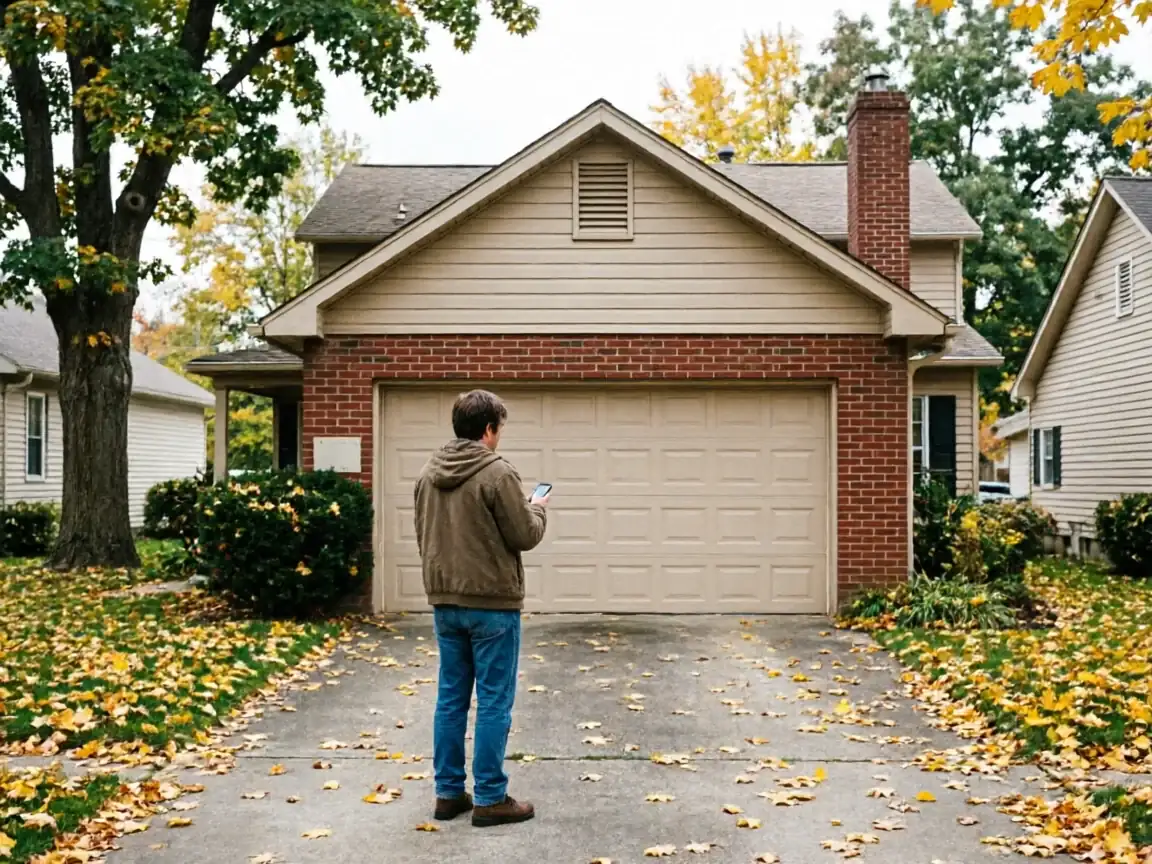
A man stands in a driveway looking at his phone in front of a closed garage door.

Tell us what’s wrong

Describe the symptom - won’t open, loud bang, opener runs but the door won’t move.

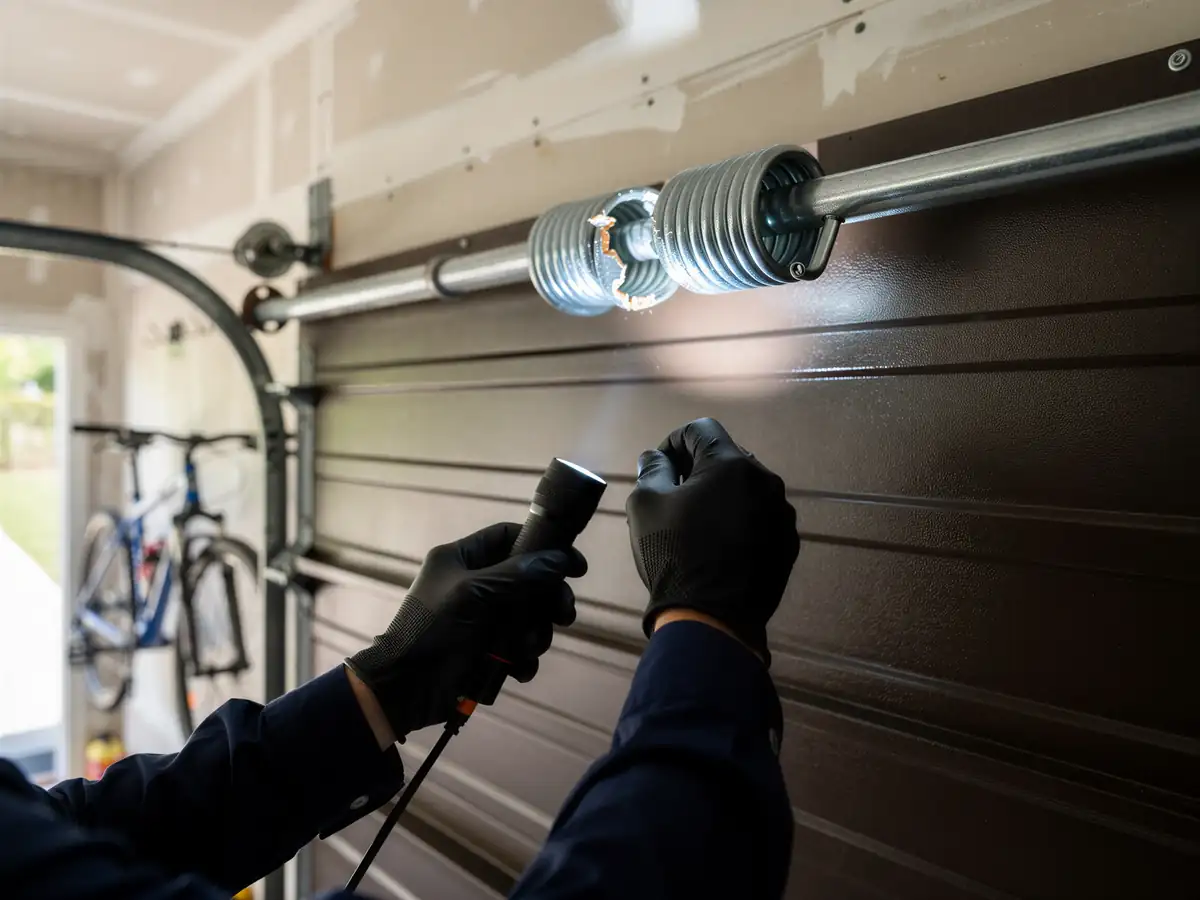
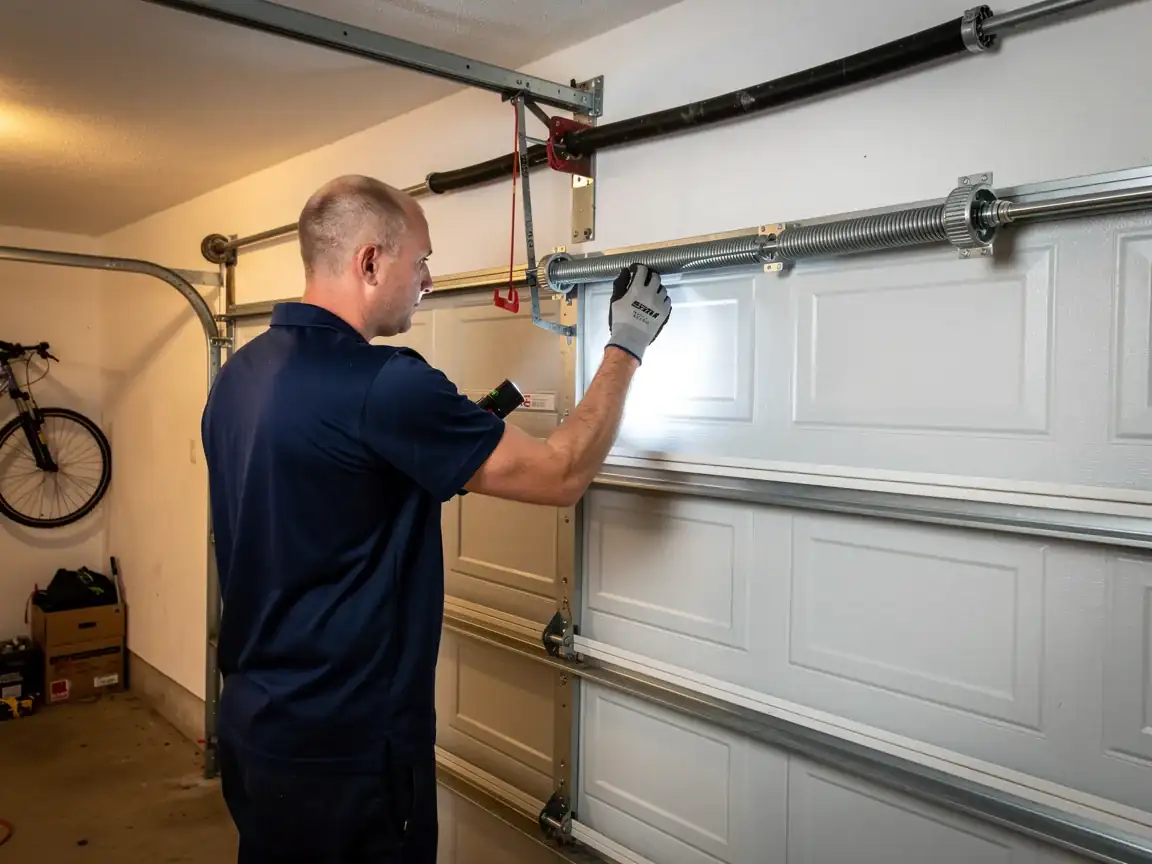
A technician shines a flashlight on a garage door torsion spring.

On-site diagnosis

A technician tests the door under power and by hand and finds what actually failed.

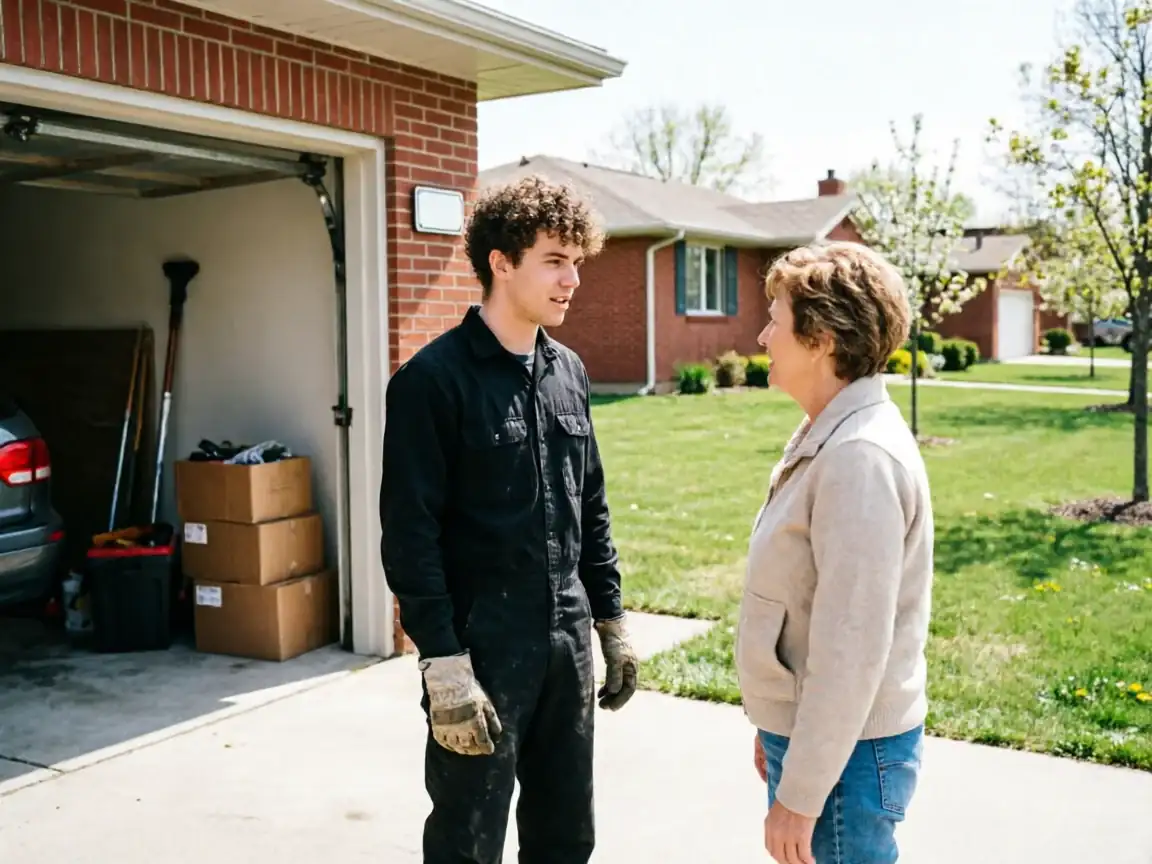
A technician in a black uniform talks to a woman in a beige jacket.

Clear, up-front plan

You get the fix that’s needed and what drives the cost - before any work starts.

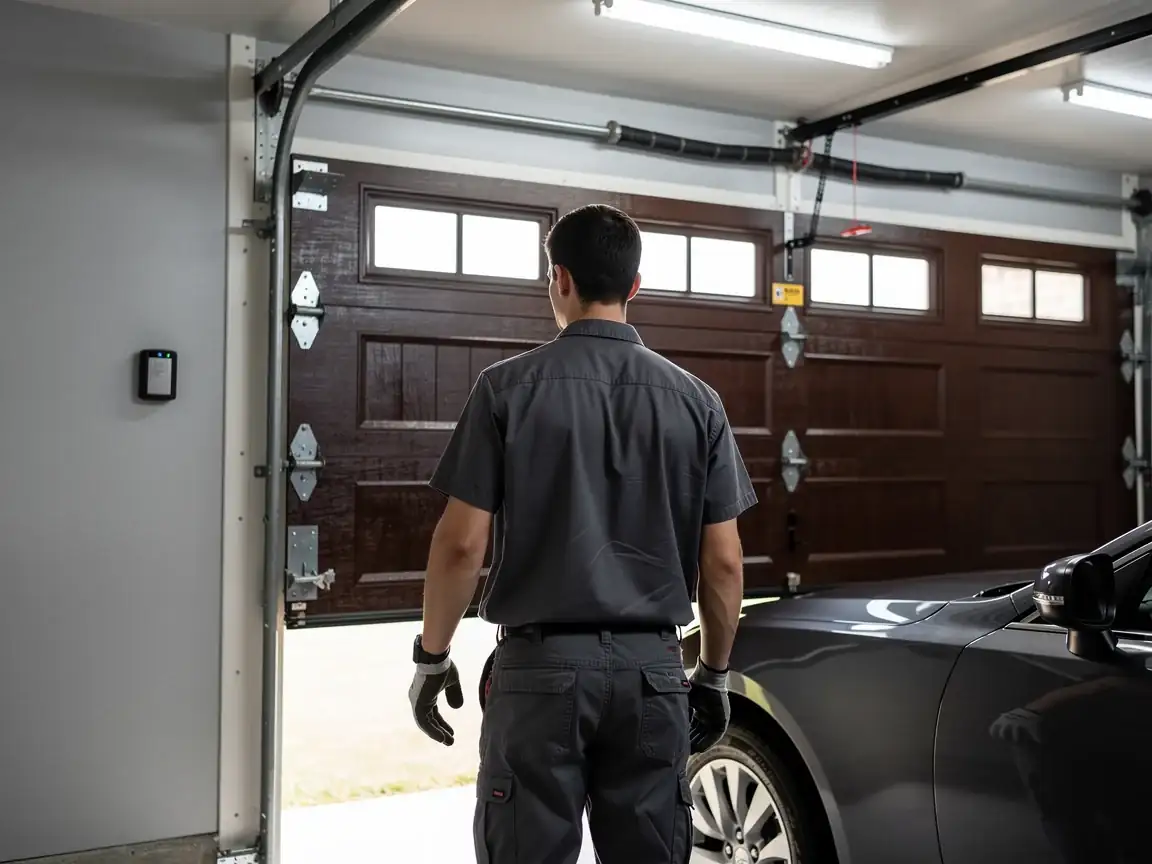
A technician stands in a garage looking at a brown garage door with windows.

Repaired & tested

The repair is done, the door is set true and tested, and the work area left clean.

Not sure which repair your door needs in Manhattan, KS? Describe what it’s doing - every job starts with a diagnosis.

How we work

What to expect

Diagnosis firstEvery visit starts by finding what actually failed - not a pre-written parts list.
The right part for the doorSprings and openers matched to the door’s weight and age, so the fix holds up.
Straight answersWhen a repair makes more sense than a replacement - or the reverse - you hear it plainly.
Clean, careful workTension released safely, hardware set true, the door tested under power before we leave.
What we do

Garage Door Services

Repair and installation work for Manhattan homes and businesses.

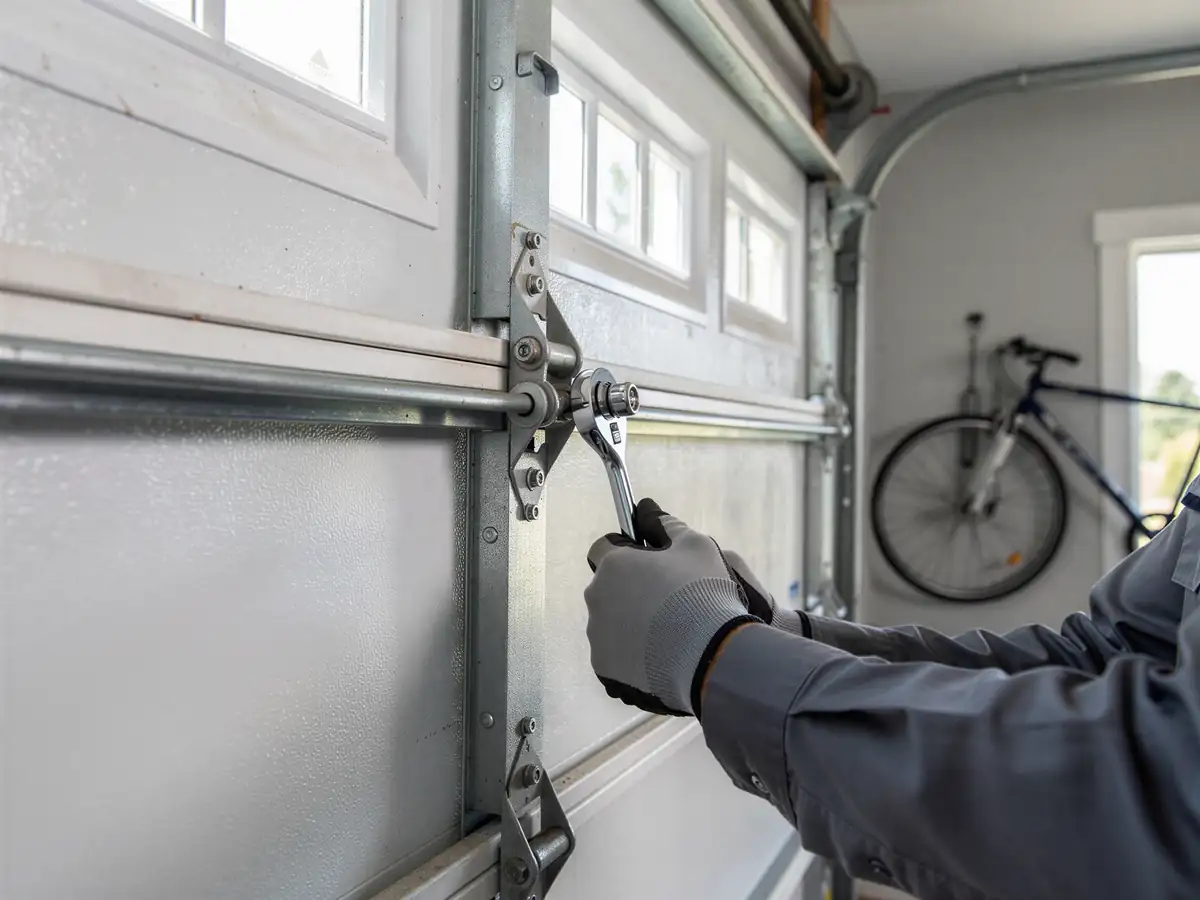
A technician in gray gloves uses a wrench to adjust a garage door hinge.

Garage Door Repair

Garage door repair in Manhattan, KS for homes built 1966-2007. We fix springs, openers, and tracks strained by cold-season stress on older torsion hardware.

Learn more
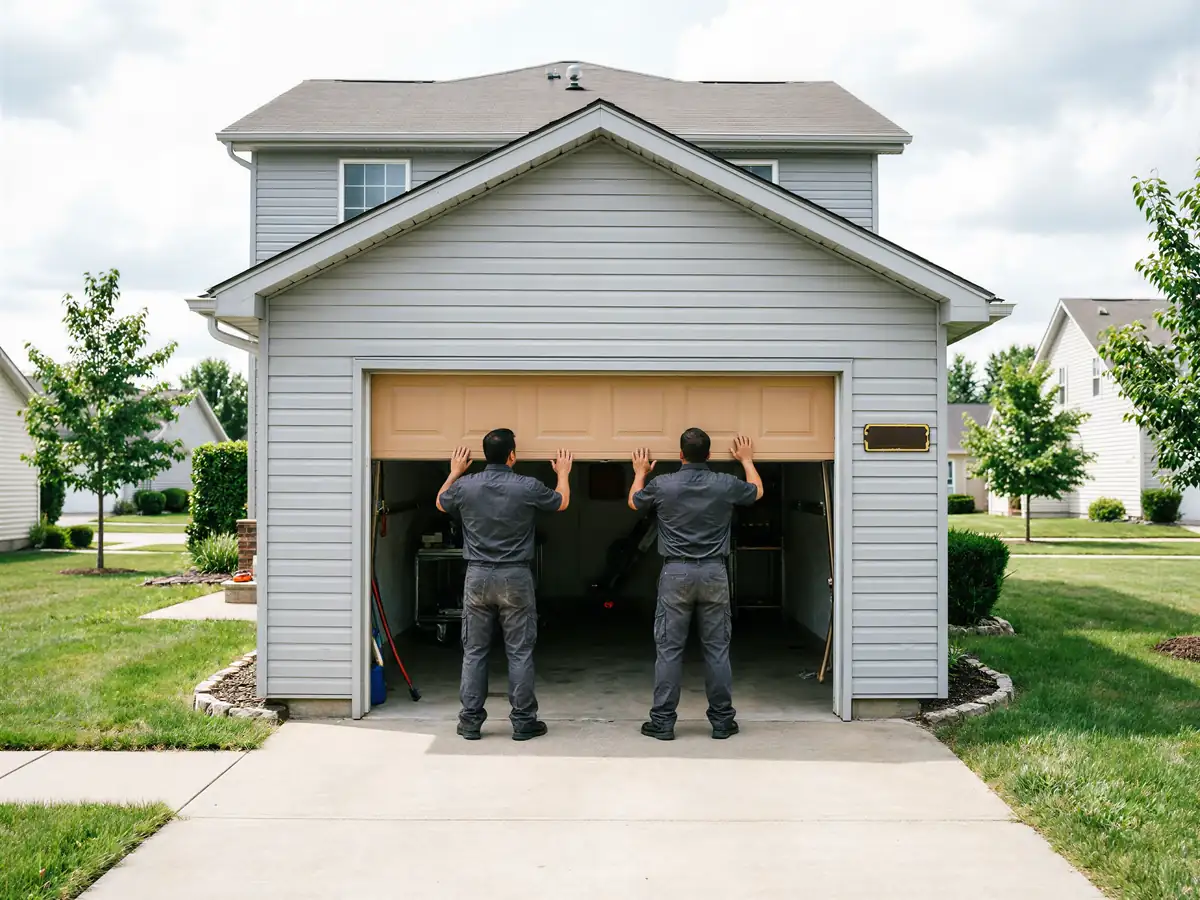
Two technicians are installing a beige garage door on a gray house.

Garage Door Installation

New garage door installation in Manhattan, KS, sized for openings common in homes built from 1966 to 2007, and set up to handle our cold Kansas winters.

Learn more
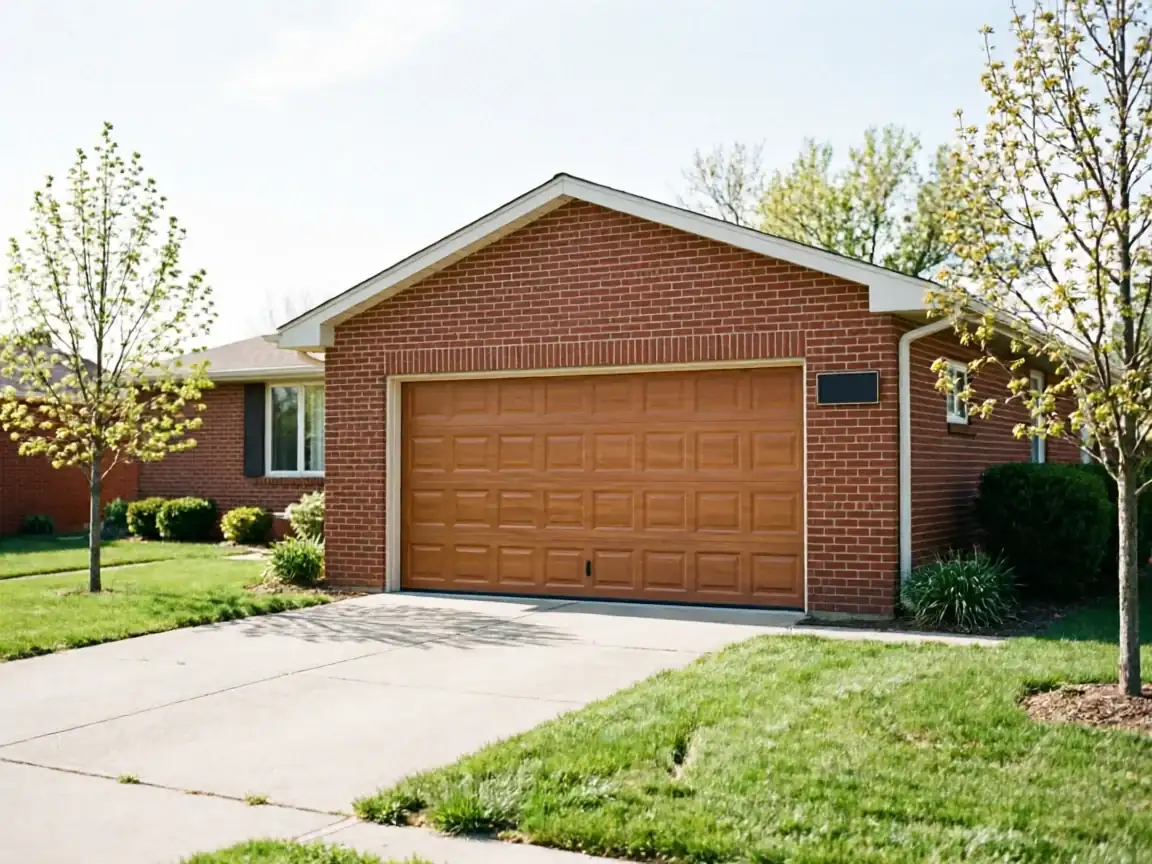
A brown paneled garage door is on a red brick house with a green lawn.

Garage Door Service

Garage door repair and tune-up service built around Manhattan KS homes from the 1966-2007 building boom and the area's cold winters. Call for a service visit.

Learn more
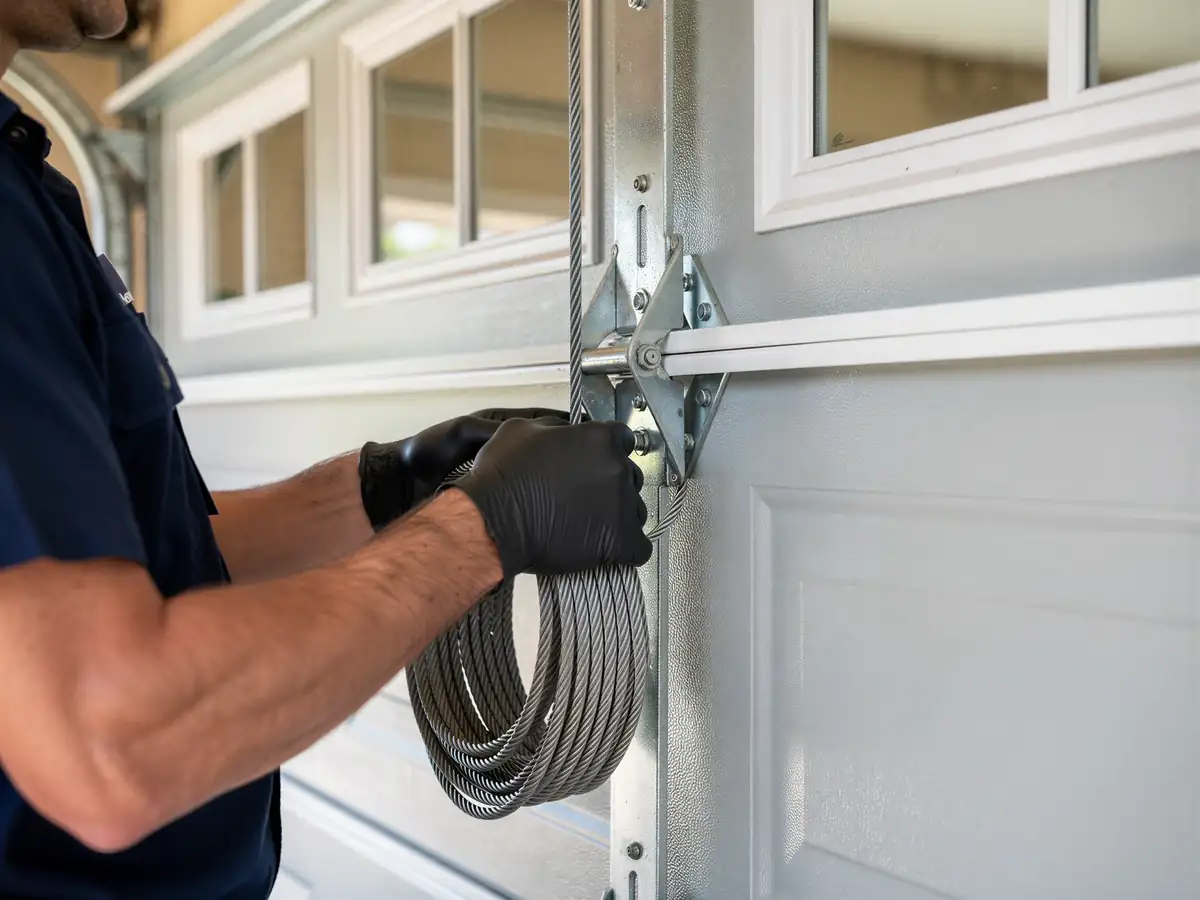
A technician wearing black gloves holds a coiled garage door cable.

Cable Repair

Snapped or frayed garage door cables are common on Manhattan-area houses built from the 1960s through the 2000s. Same service area, straight talk on what a cable repair involves.

Learn more
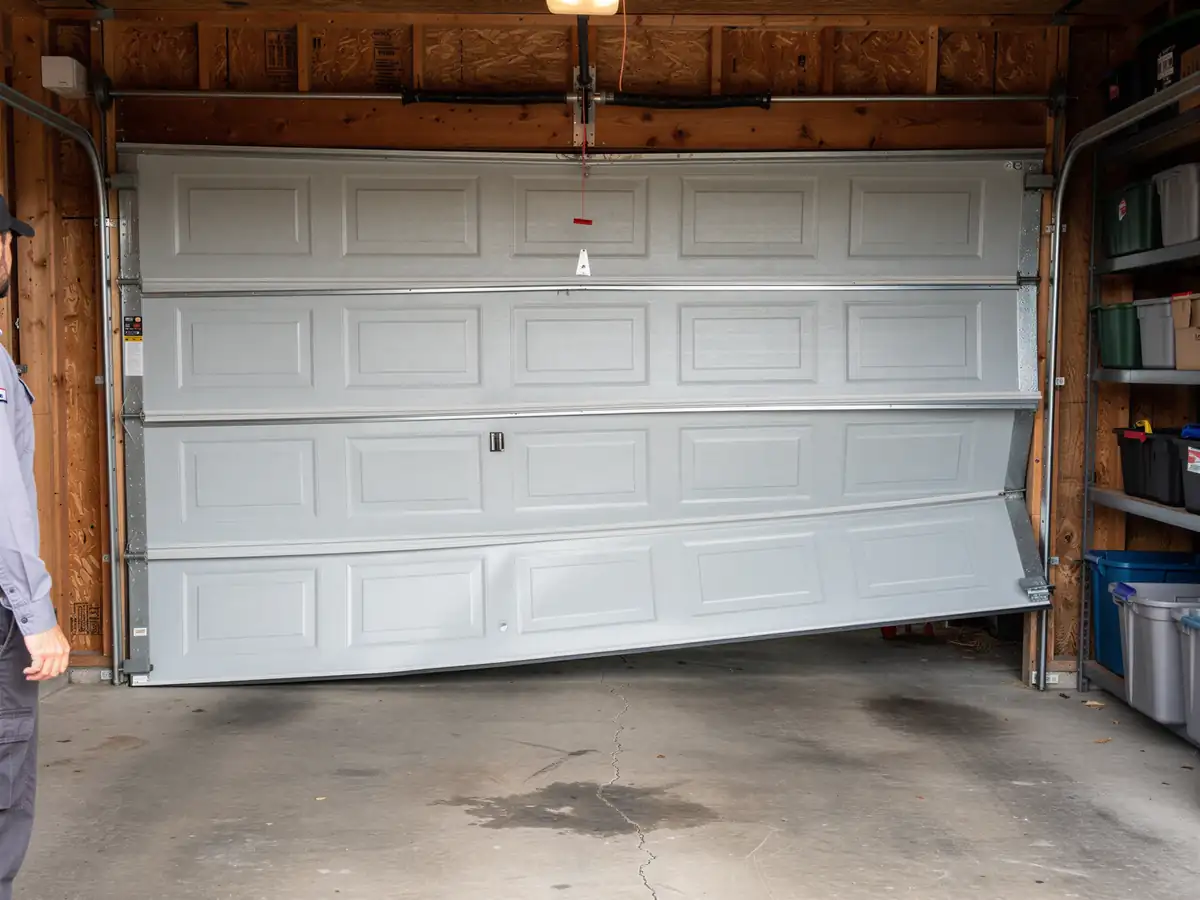
The gray garage door is bent and partially off its tracks, with a technician visible on the left.

Off-Track Repair

Off-track garage door repair for Manhattan, KS homes built mostly 1966-2007, where original rollers and tracks weren't made for Kansas freeze-thaw cycles.

Learn more
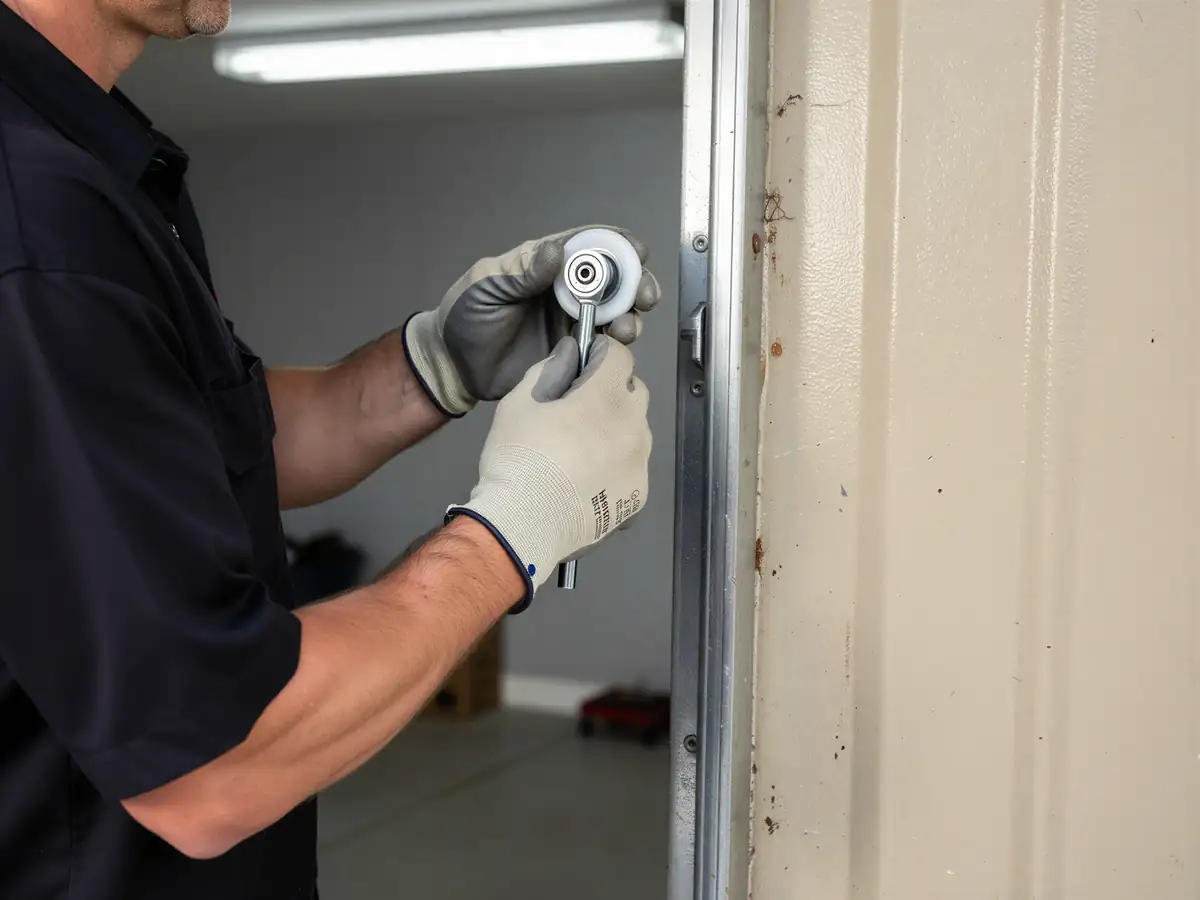
A technician wearing gloves holds a new roller next to a garage door track.

Roller Replacement

Rollers grinding or catching on original 1960s-70s track? See why cold mornings and old steel-wheel setups fail across the Manhattan, KS service area, and how we fix it.

Learn more
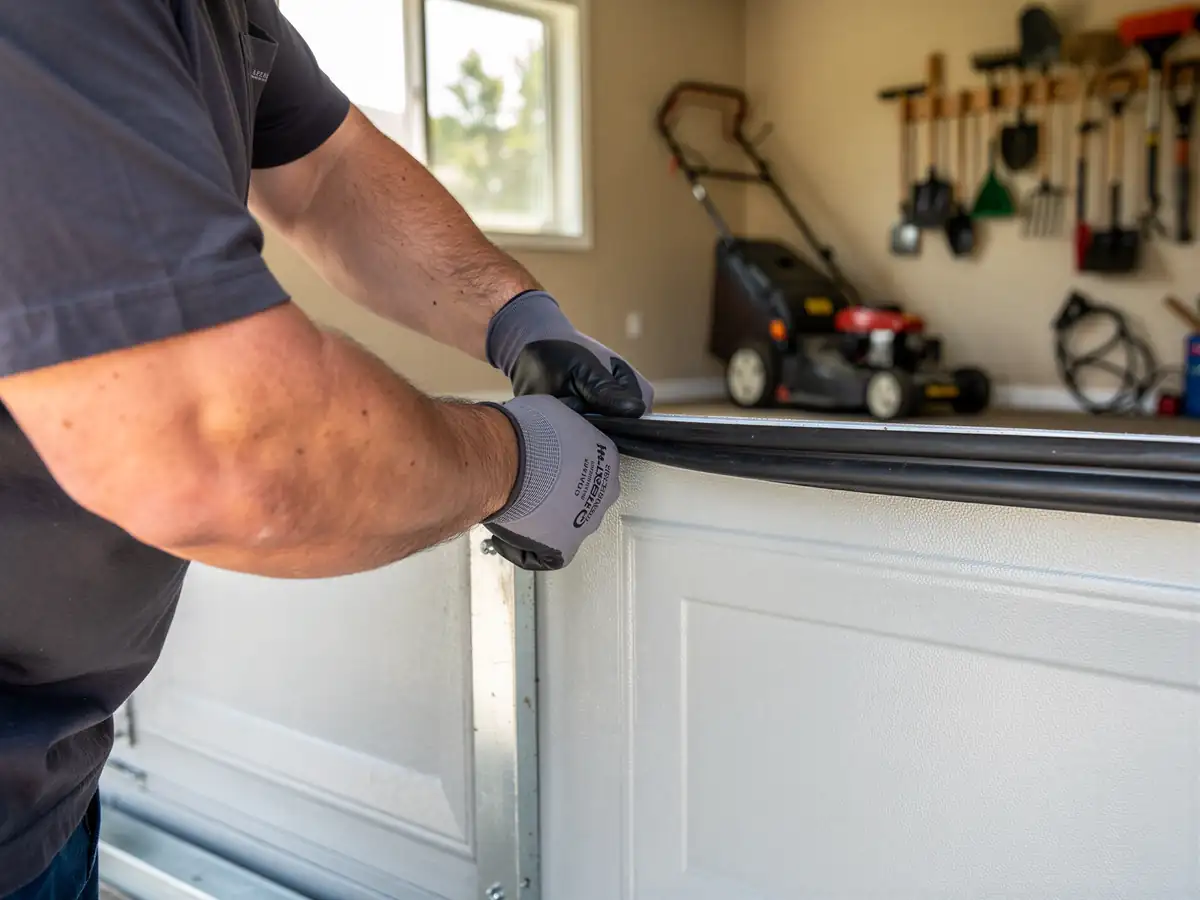
A technician wearing gloves installs a new weather seal on a white garage door.

Maintenance

Garage door maintenance for Manhattan-area homes built mostly between 1966 and 2007, where cold winters and original hardware wear springs, rollers, and tracks faster than owners expect.

Learn more
A technician shines a flashlight on a broken garage door torsion spring.

Emergency Garage Door Repair

Broken spring, snapped cable, or a door stuck open in the cold - Manhattan Garage Door Pros answers emergency calls across the Manhattan, KS service area.

Learn more
Questions

Frequently asked

Straight answers about garage door repair in Manhattan. Still unsure? Ask us directly.

My garage door is original to a 1970s house in Manhattan - should I replace the spring before it breaks?

If it's visibly sagging, rusted, or the door feels heavier to lift by hand than it used to, yes - have it checked before it snaps. A spring from that era is often sized for older torsion hardware, so replacing it proactively is usually cheaper and safer than an emergency call after it fails under load.

Why does my door stick more in winter here than it used to?

Cold steel contracts and tightens tolerances in the track, and springs lose a little tension in hard cold. If the door was already slightly misaligned, winter is when that shows up as binding or a roller jumping the track.

Is it worth repairing an old door or just replacing it?

Depends what's failing. If it's one part - a spring, a cable, a roller - repair makes sense. If the track, spring, and panels are all showing age on a door that's decades old, replacement is often cheaper than repairing each piece separately over a year.

Ready to get your garage door sorted?

Tell us what it’s doing and where you are in Manhattan - we’ll take it from there.

Request a QuoteCall