How That Shows Up in the Door
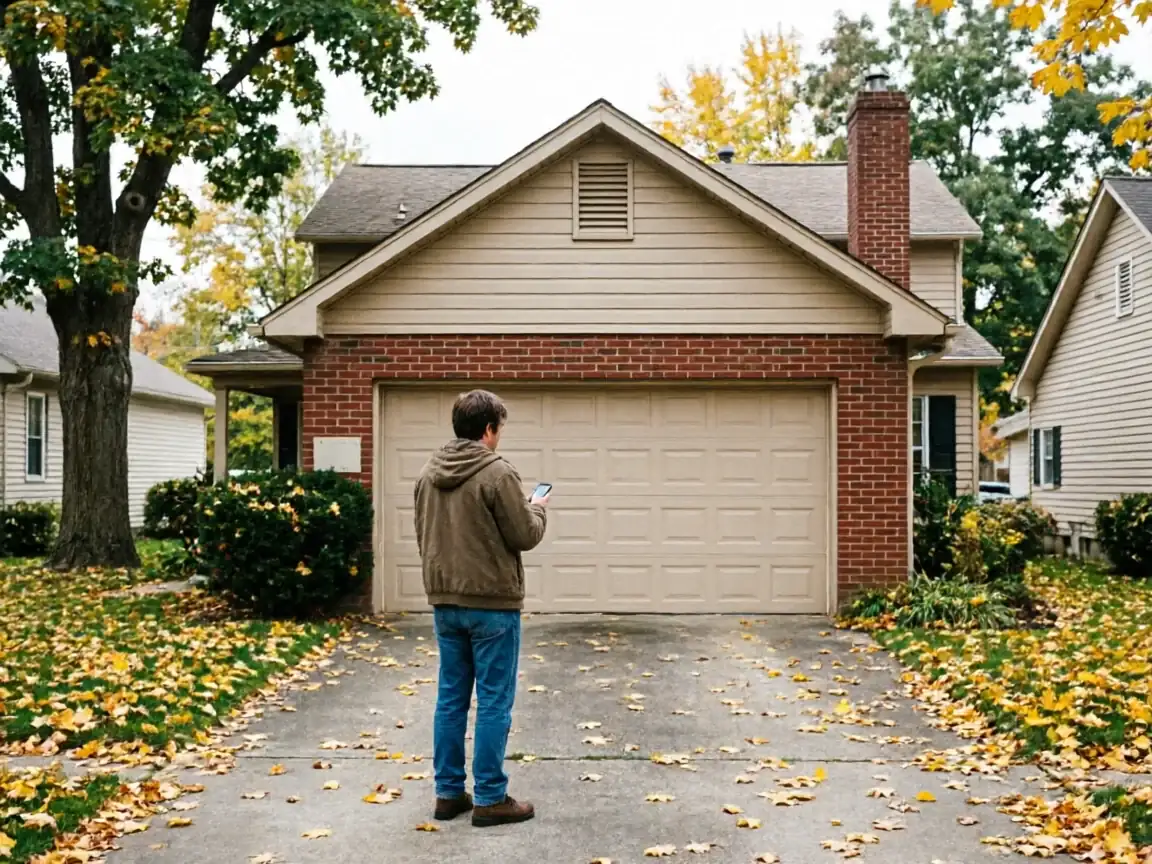
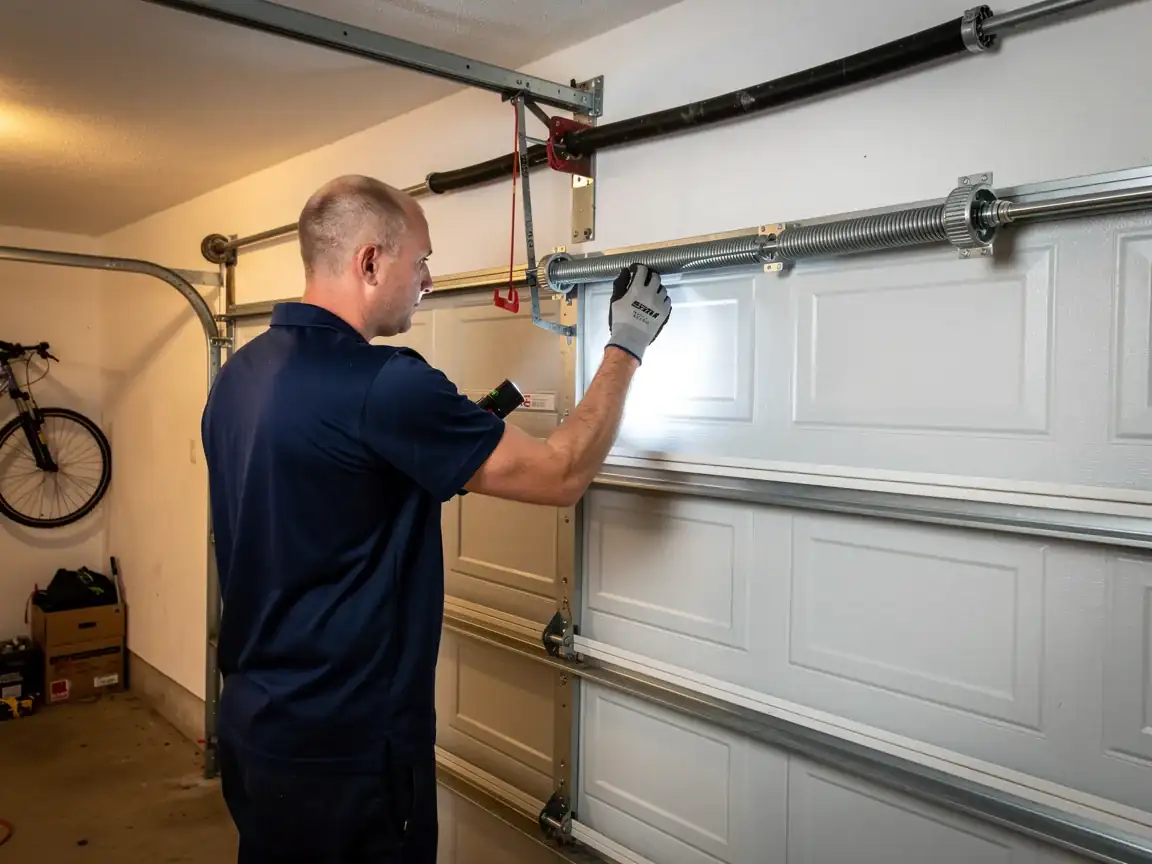
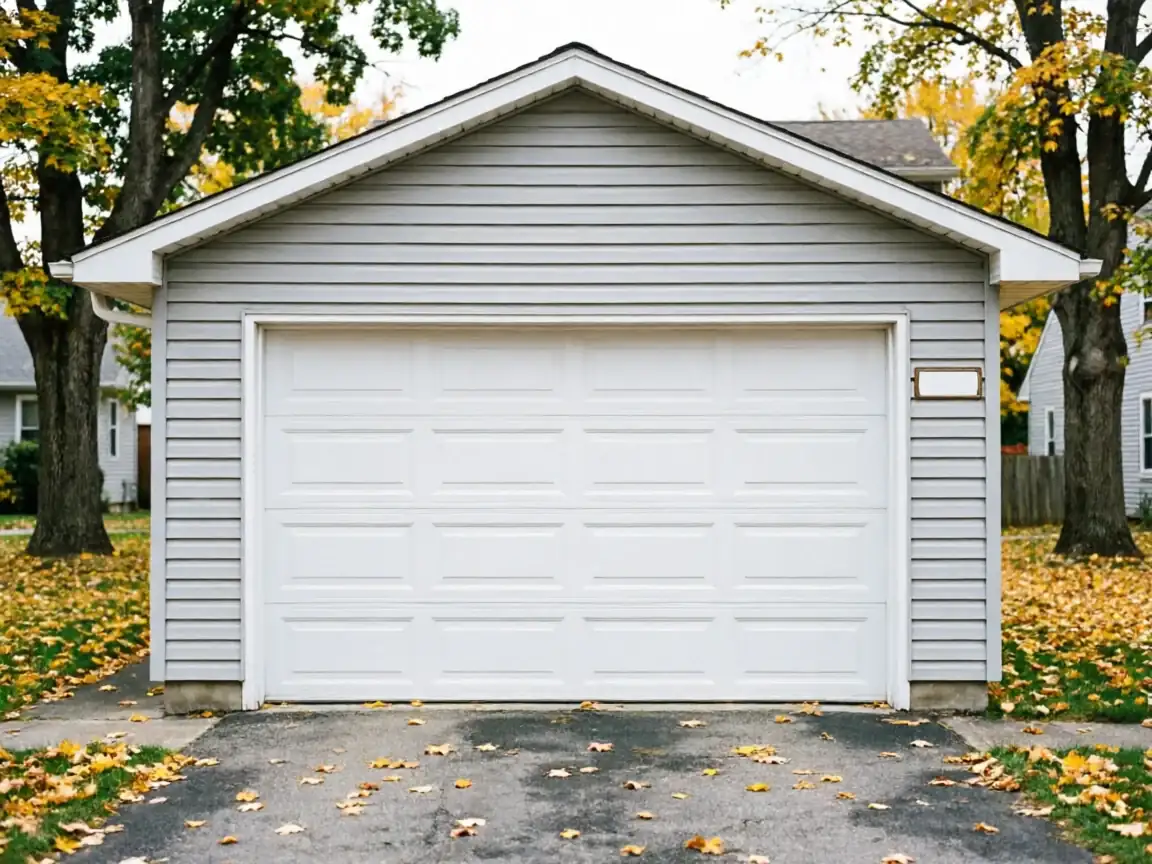
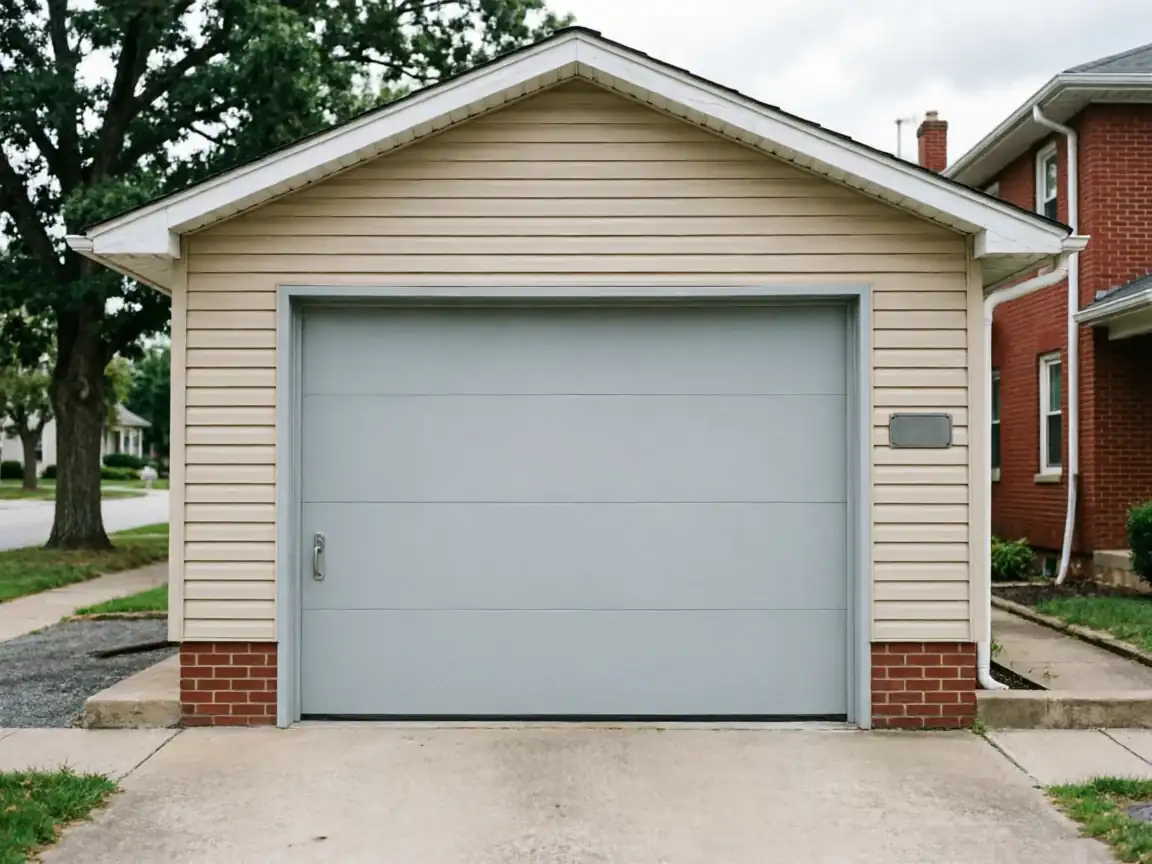
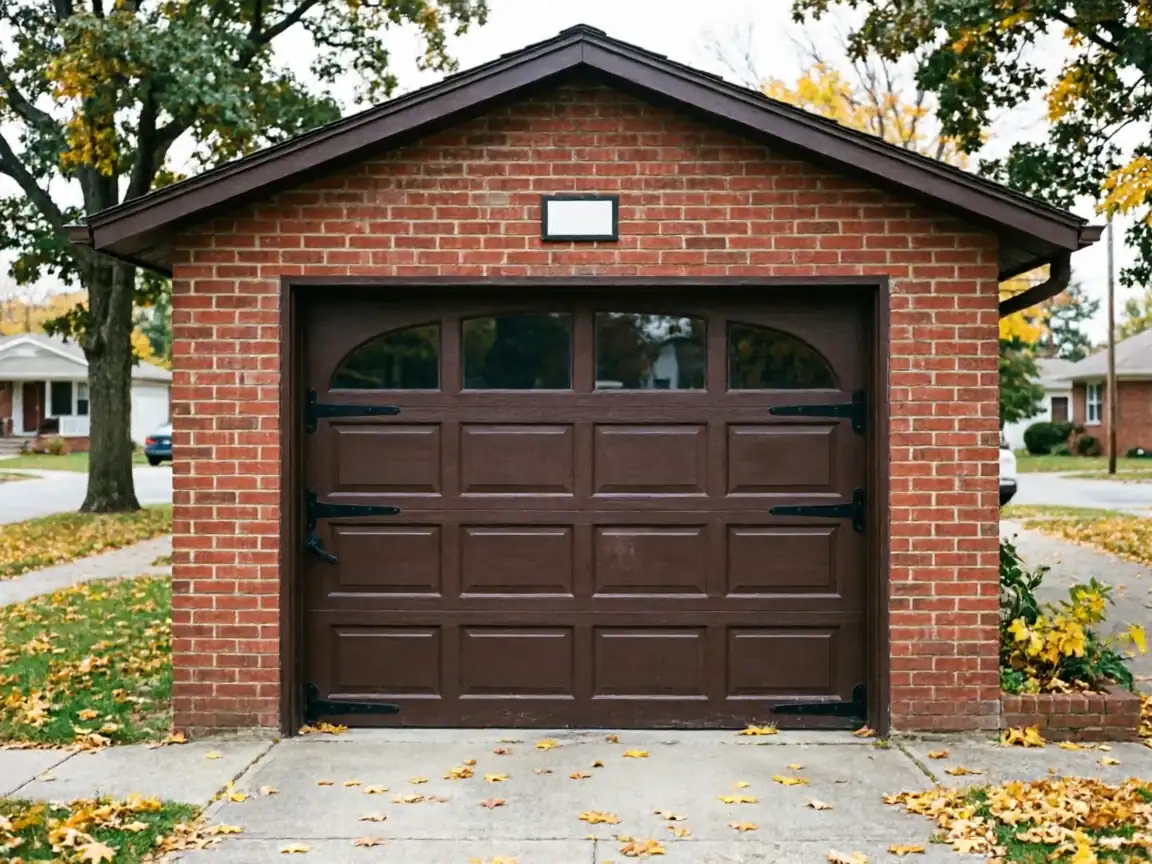
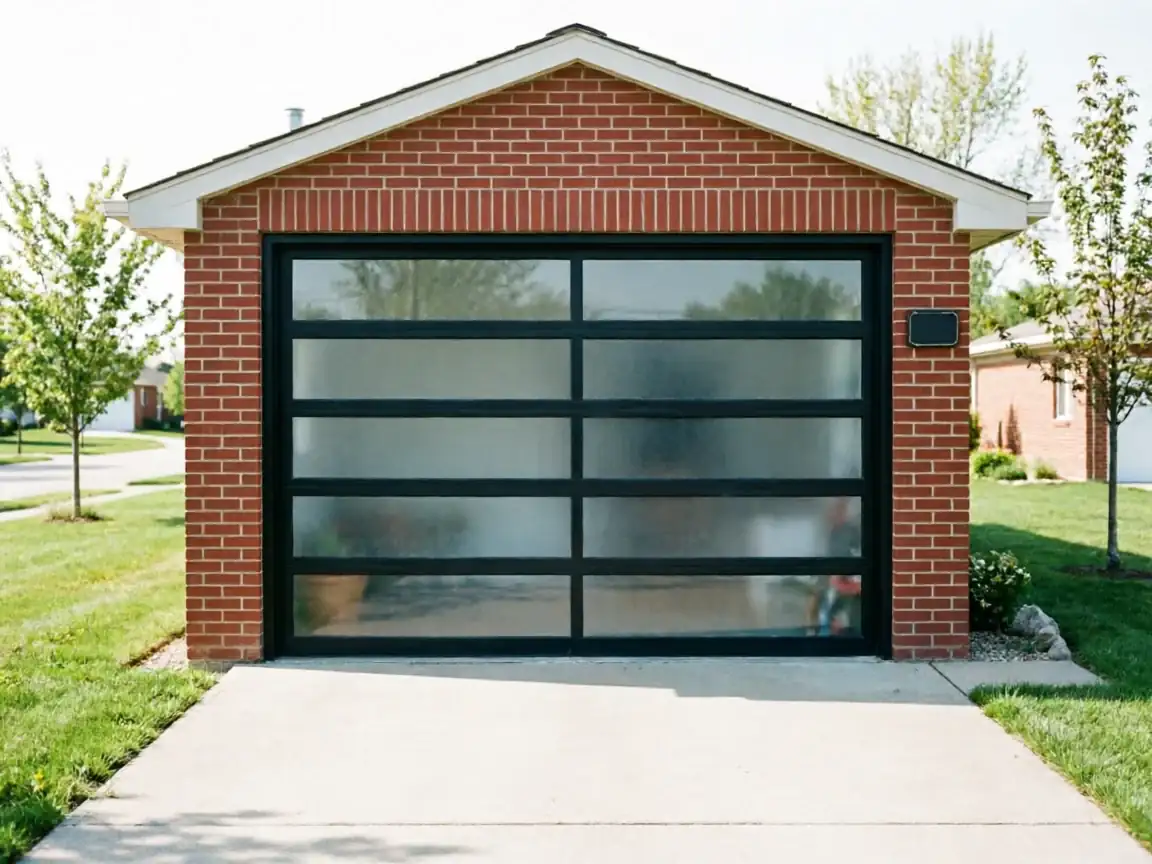
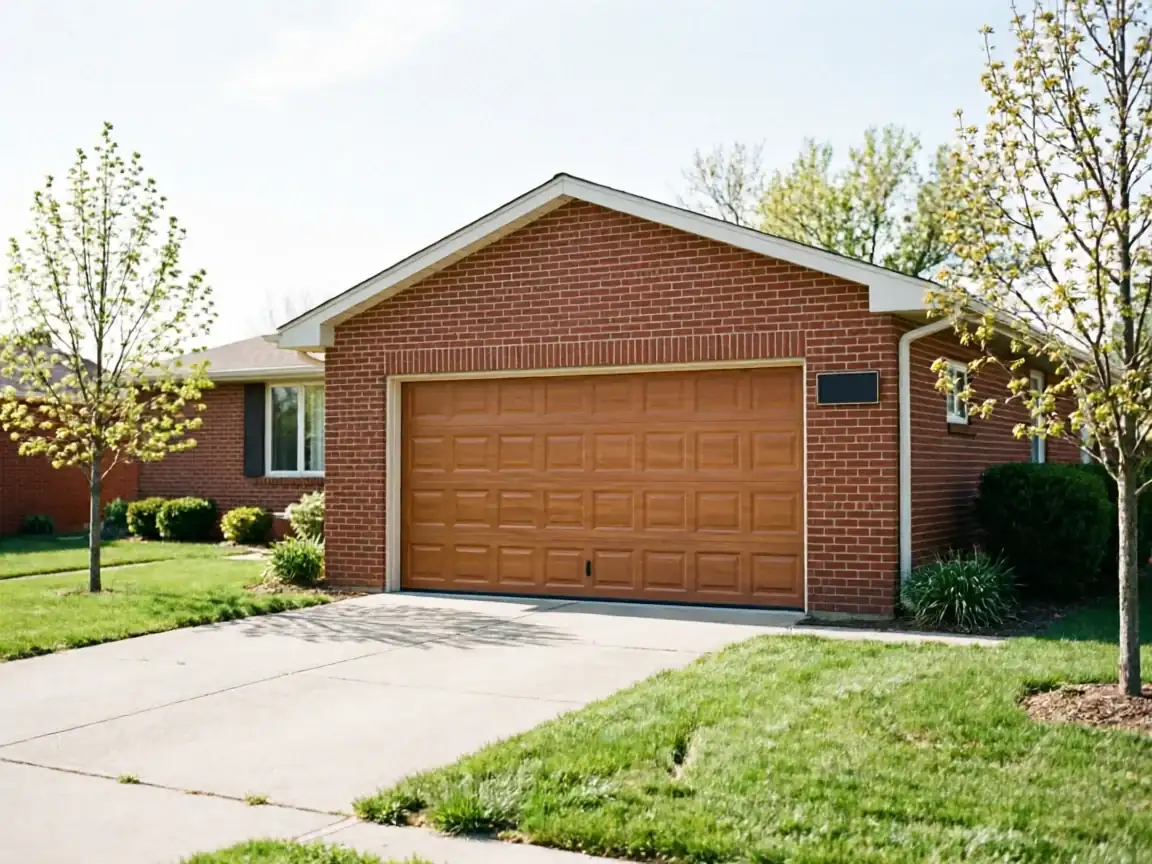
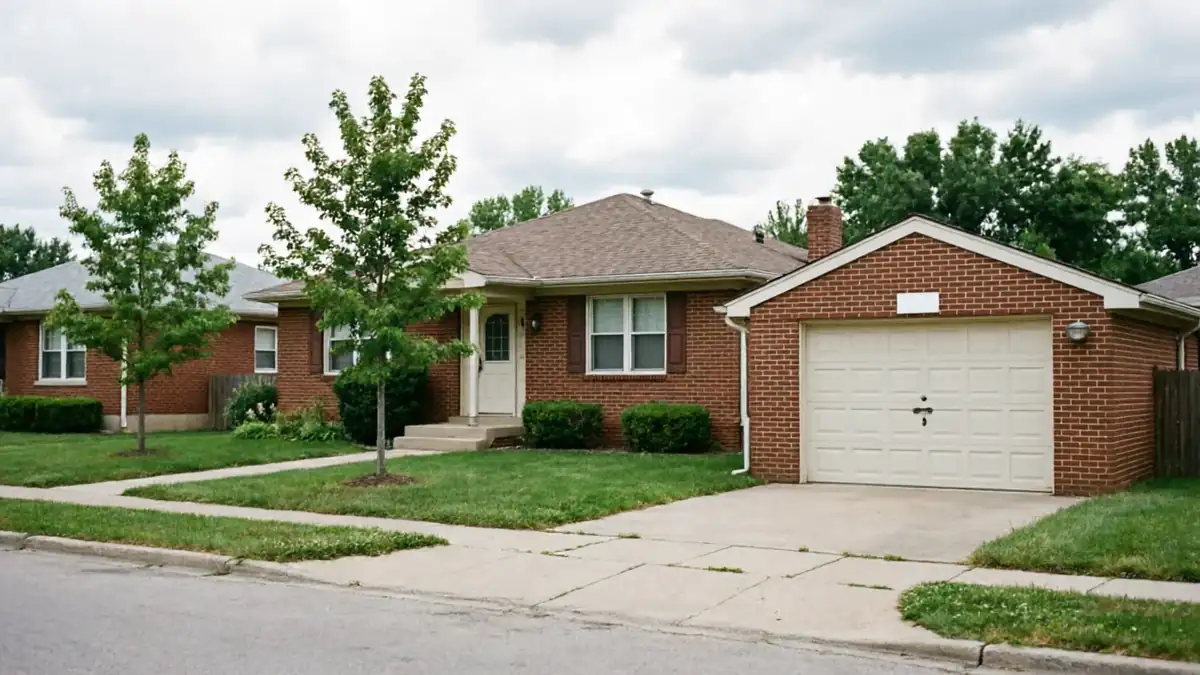
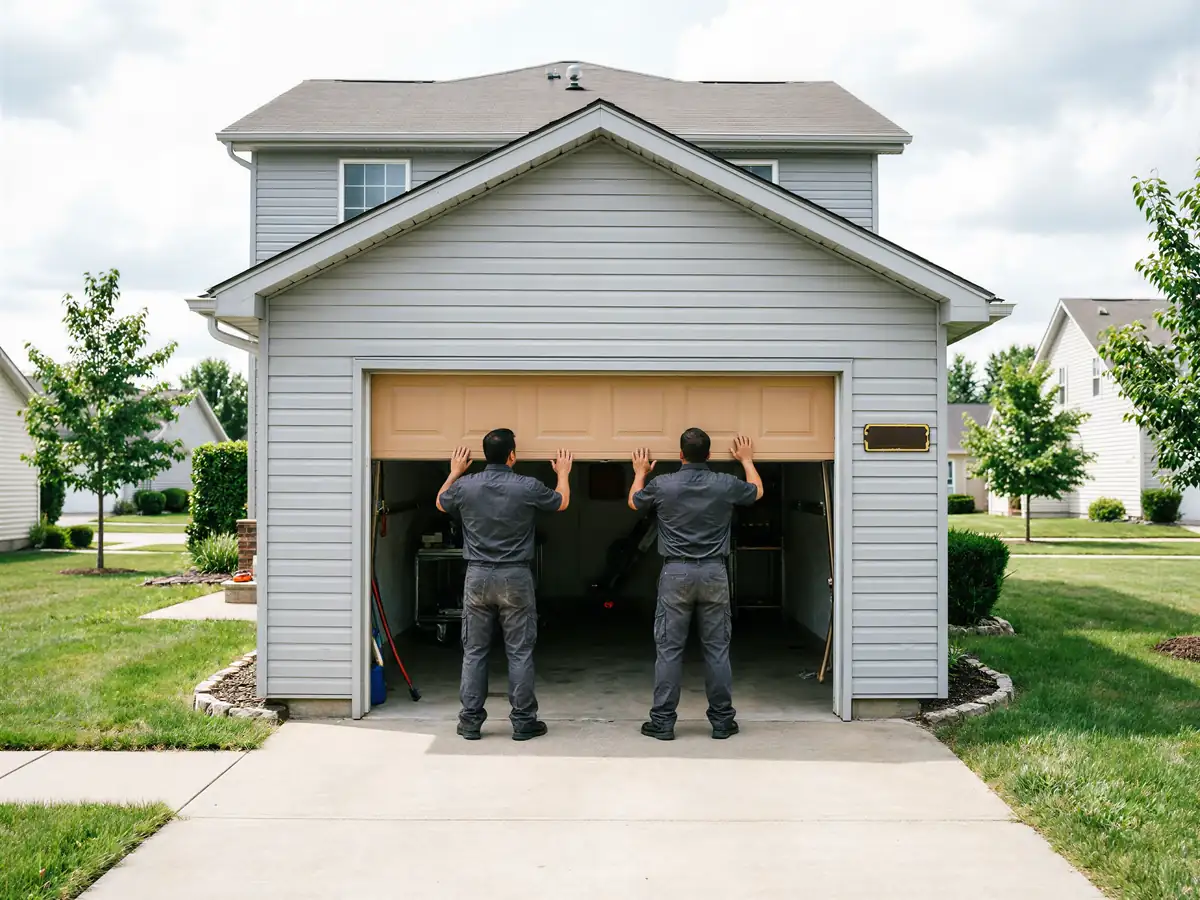
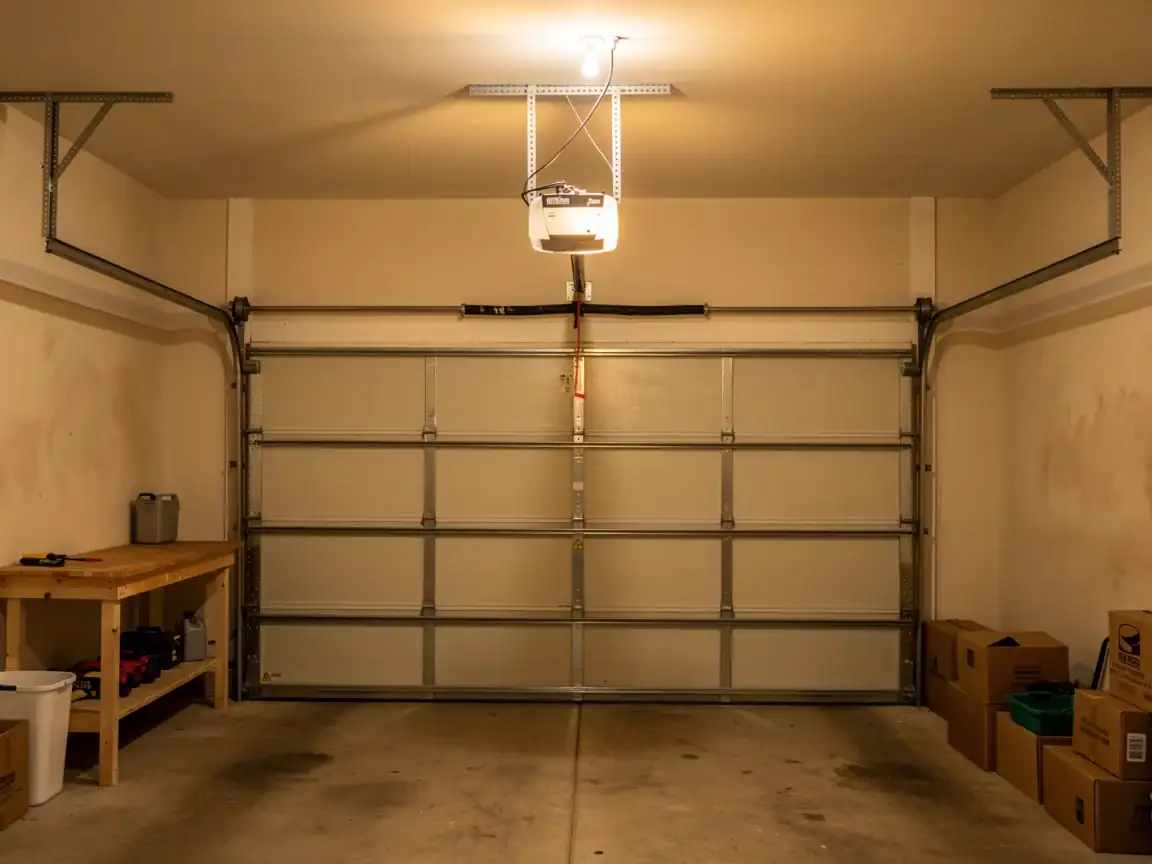
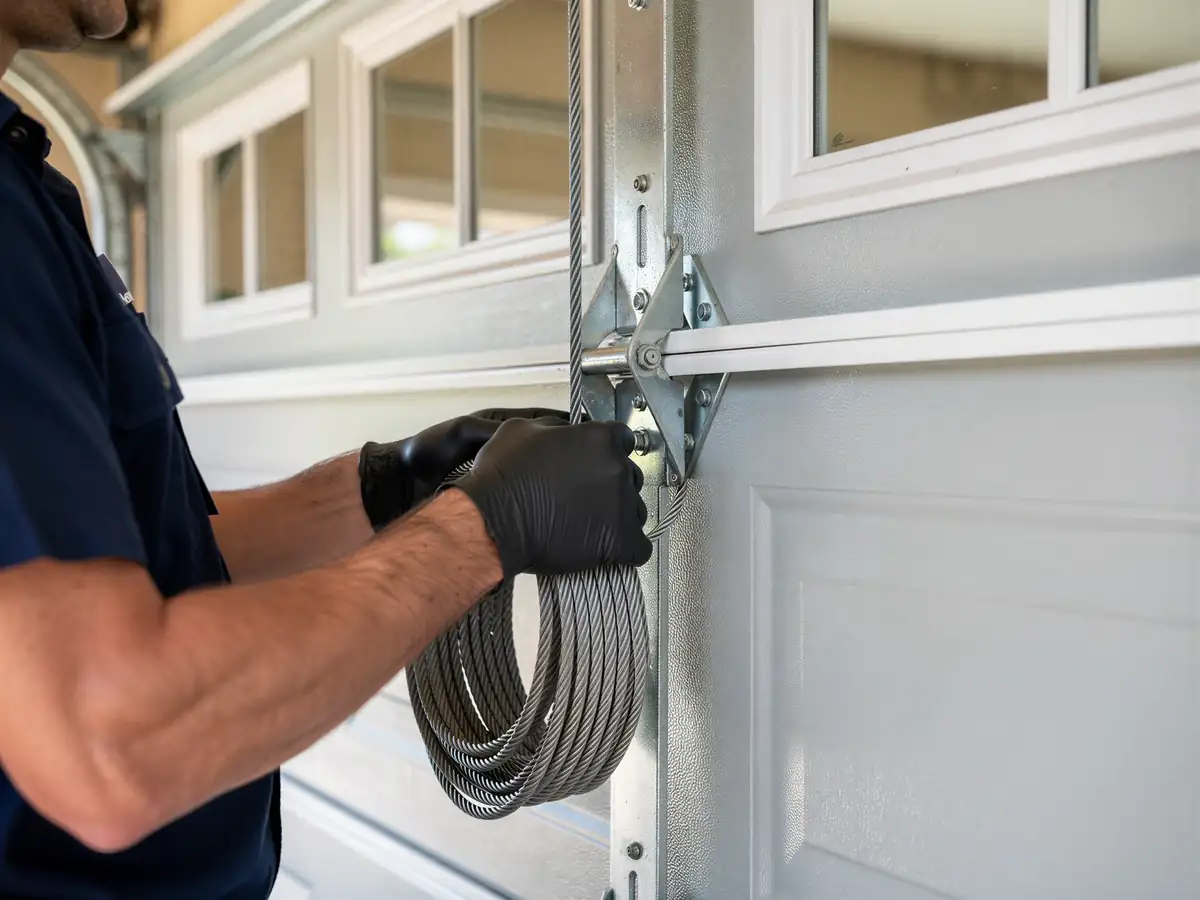
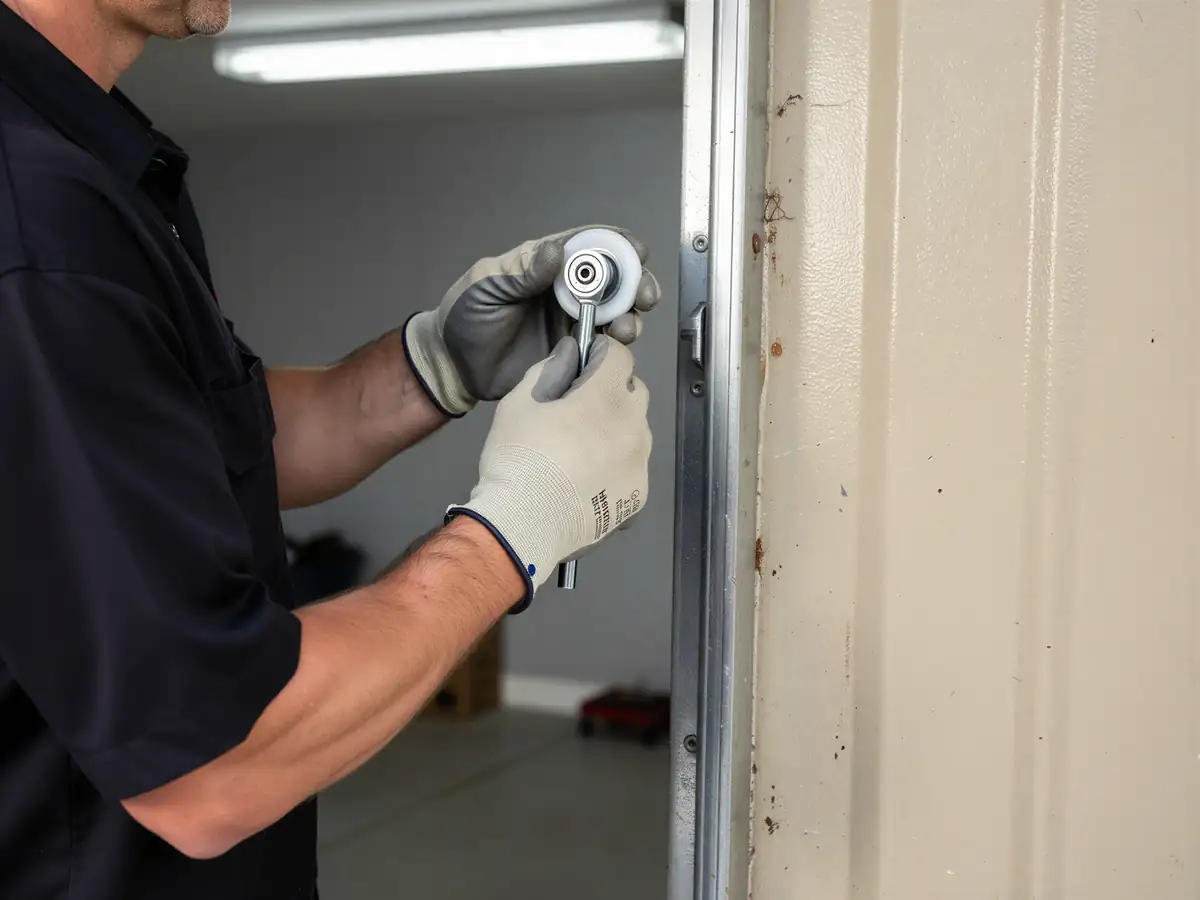
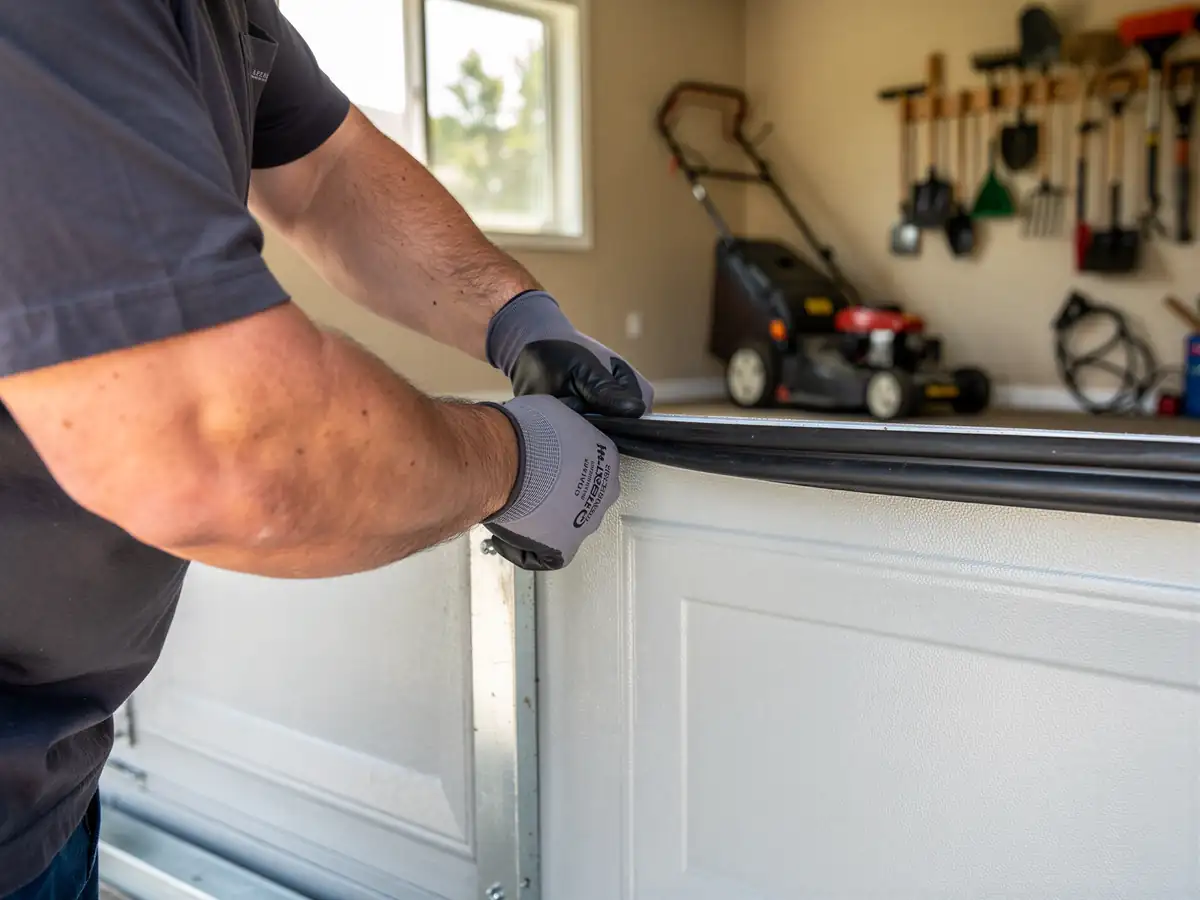
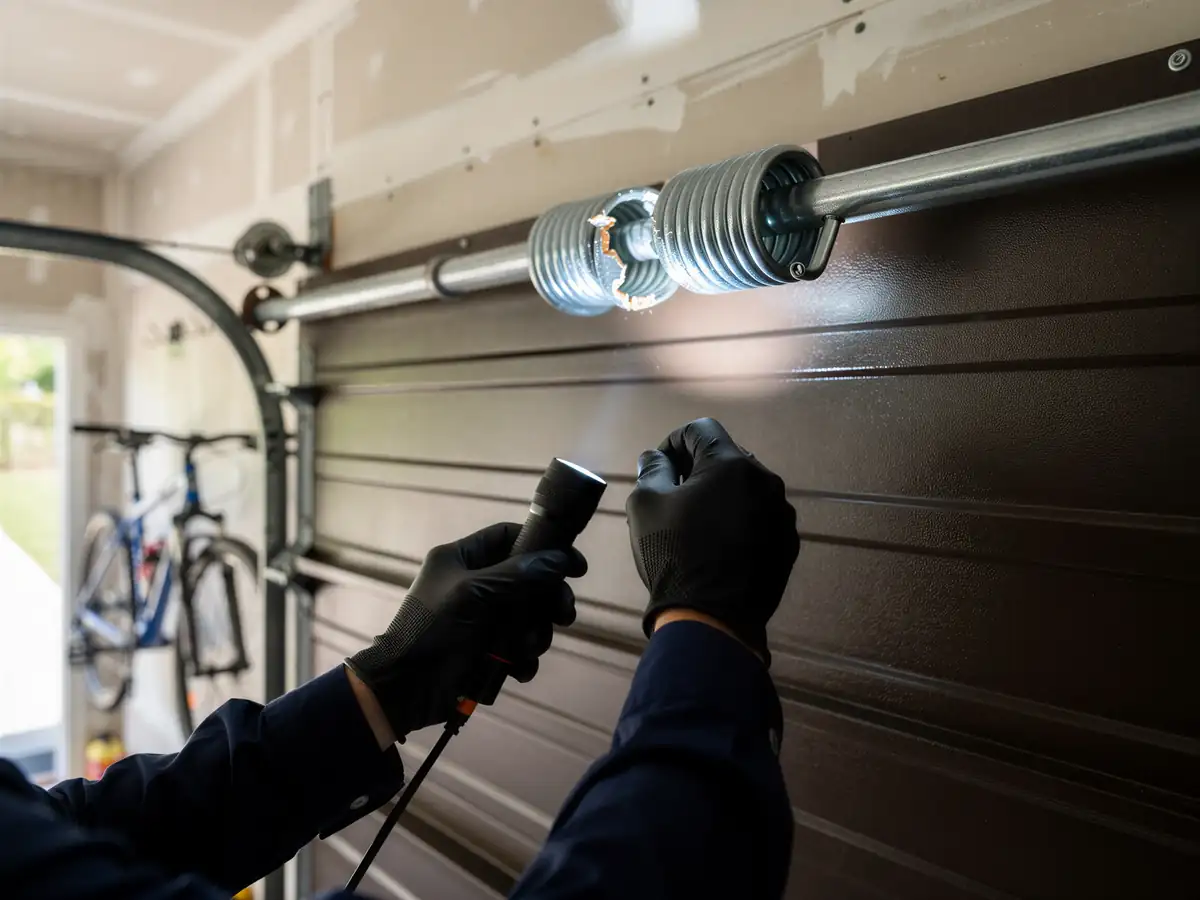
Fort Riley is the outlier in our coverage area. Median year built here lands around 2007, which is decades newer than most of the 1960s-70s stock we work on closer to Manhattan, 12 miles away. That gap changes what breaks. You're not dealing with original one-piece doors on side-mounted torsion hardware from the Johnson administration. You're dealing with sectional steel doors on center-mounted torsion springs, factory-installed openers with circuit boards, and photo-eye safety sensors that were code when the house went up. The failures are different too. Instead of hardware nobody stocks, we see worn nylon rollers, opener logic boards that age out around year ten to fifteen, and weatherstripping that was never built for a Kansas winter in the first place. Housing on post also tends to use a handful of repeated floor plans, so the same door width and spring size shows up again and again across a block. That's useful - it means when we quote a torsion spring replacement for one of these doors, we usually know the part before we arrive.
The Usual Work Here
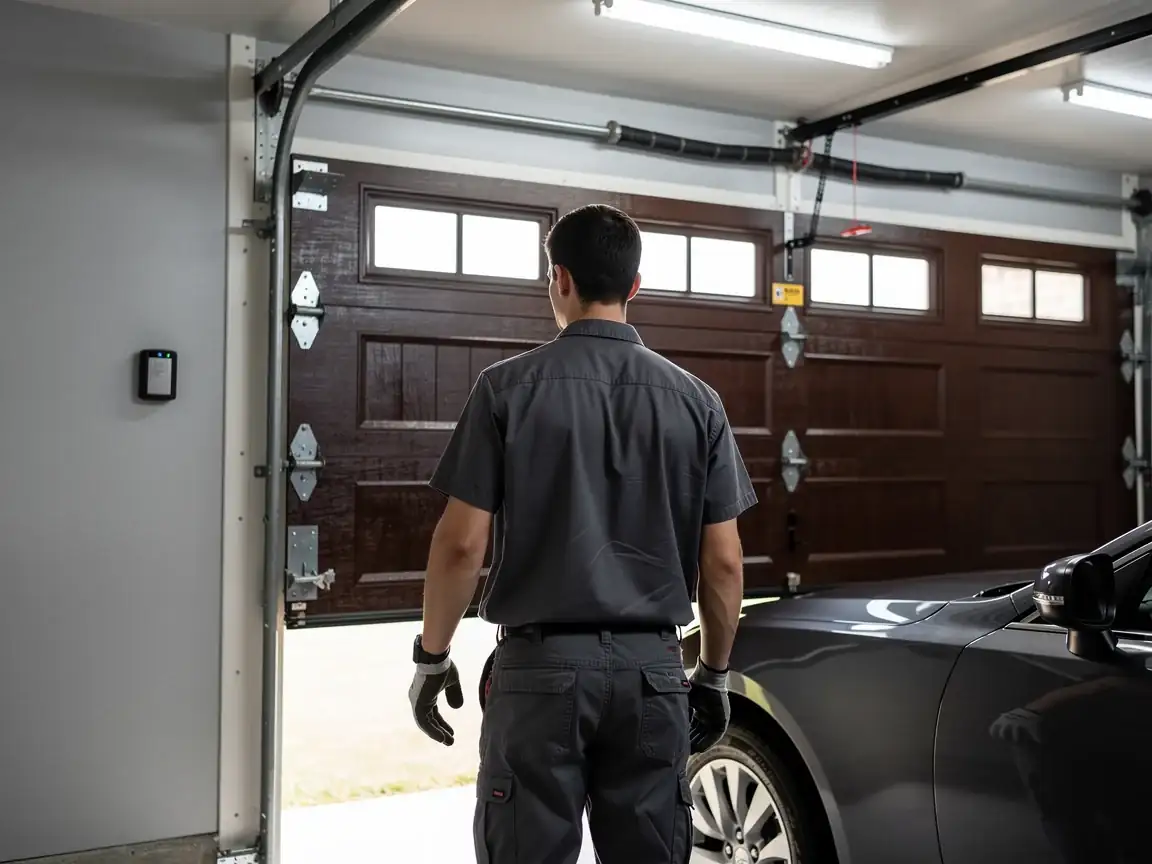
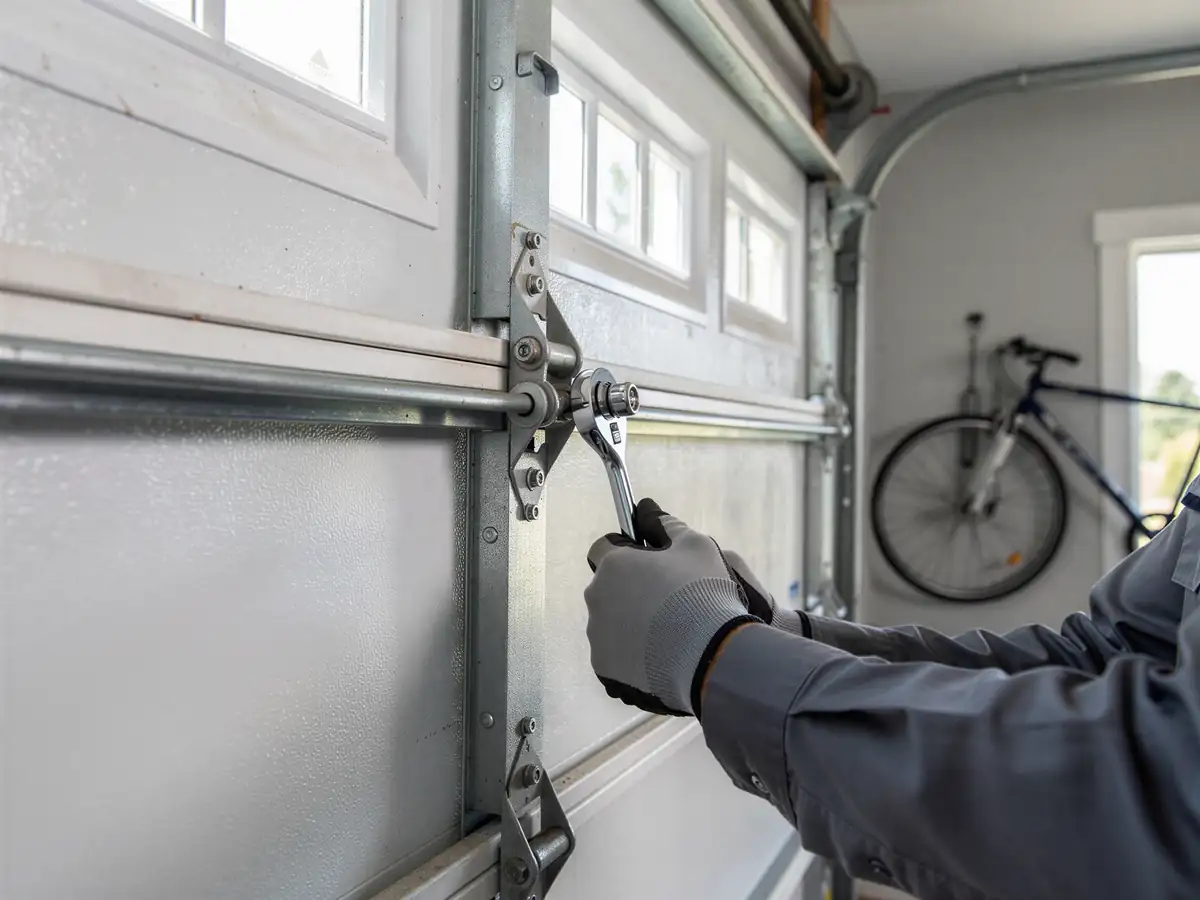
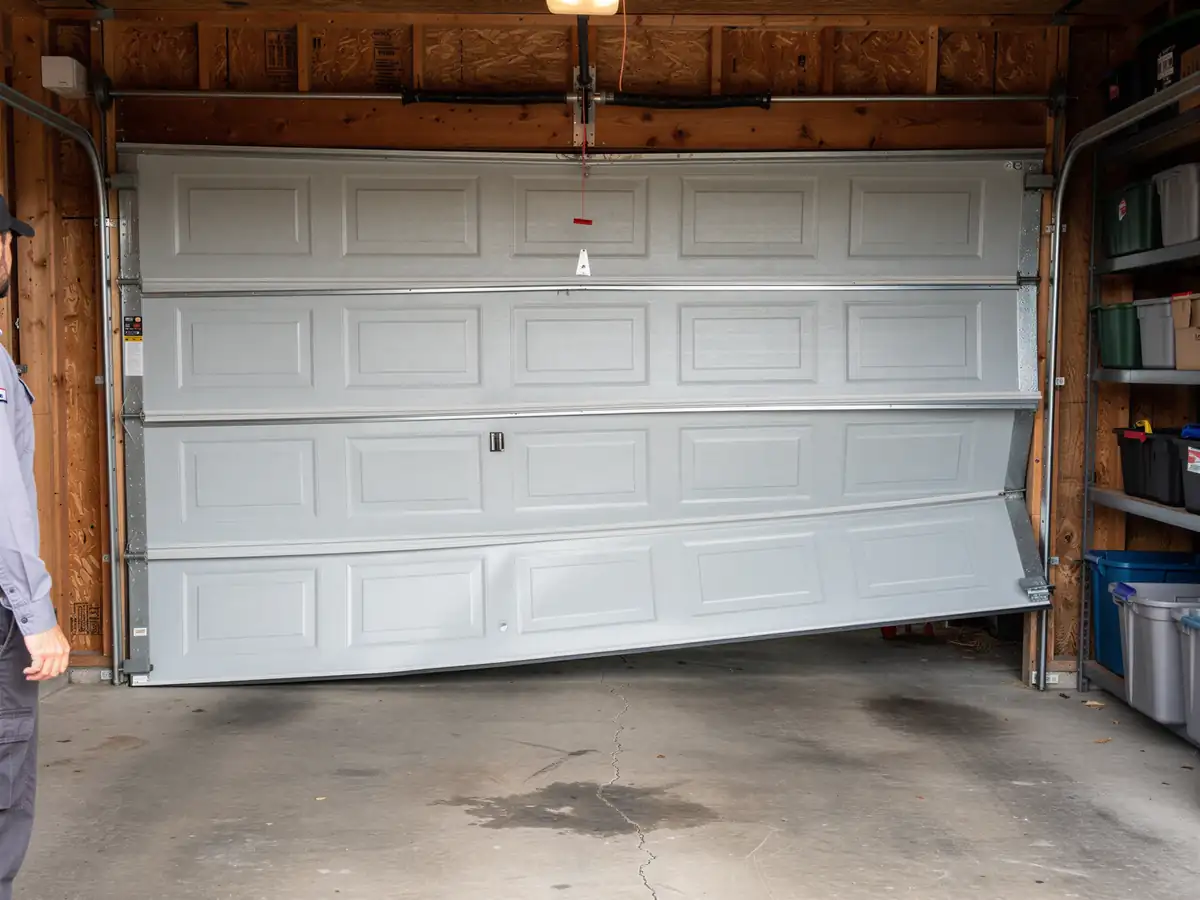
On newer builds like these, the first calls are almost always opener-related - a unit that runs but won't respond to the remote, or one that reverses before the door seats on the floor. Second most common: broken springs on doors that get heavy daily use, which on post housing is often the case with two vehicles and a lot of in-and-out. We also get track alignment calls, usually after a door's been bumped or a roller's worn thin enough to let the panel wander in the track. What we don't see much of here is the rotted bottom panel or rusted-through hinge work that shows up on 1970s doors elsewhere in our area - these doors are young enough that the steel and seals are usually still sound. One honest limit: if a part is specific to a newer opener model and the manufacturer's on a long lead time, we'll tell you that up front rather than promise a same-week fix we can't back.
The Houses Here
This area runs about 1,792 households, smaller than the rest of our coverage footprint, and median household income sits around $52,823 - a bit below the $61,953 median across our full service area. That matters for the kind of advice we give: on a newer door with a failed opener board, replacing just the board is usually the better call than replacing the whole unit, and we'll say so plainly instead of upselling a full system. The building stock here being newer also means insulation and weatherstripping are generally doing their job better against the cold than older doors elsewhere in our coverage, so most of what we're repairing is mechanical wear, not a door that was undersized for the climate to begin with.