Can You Do This Yourself
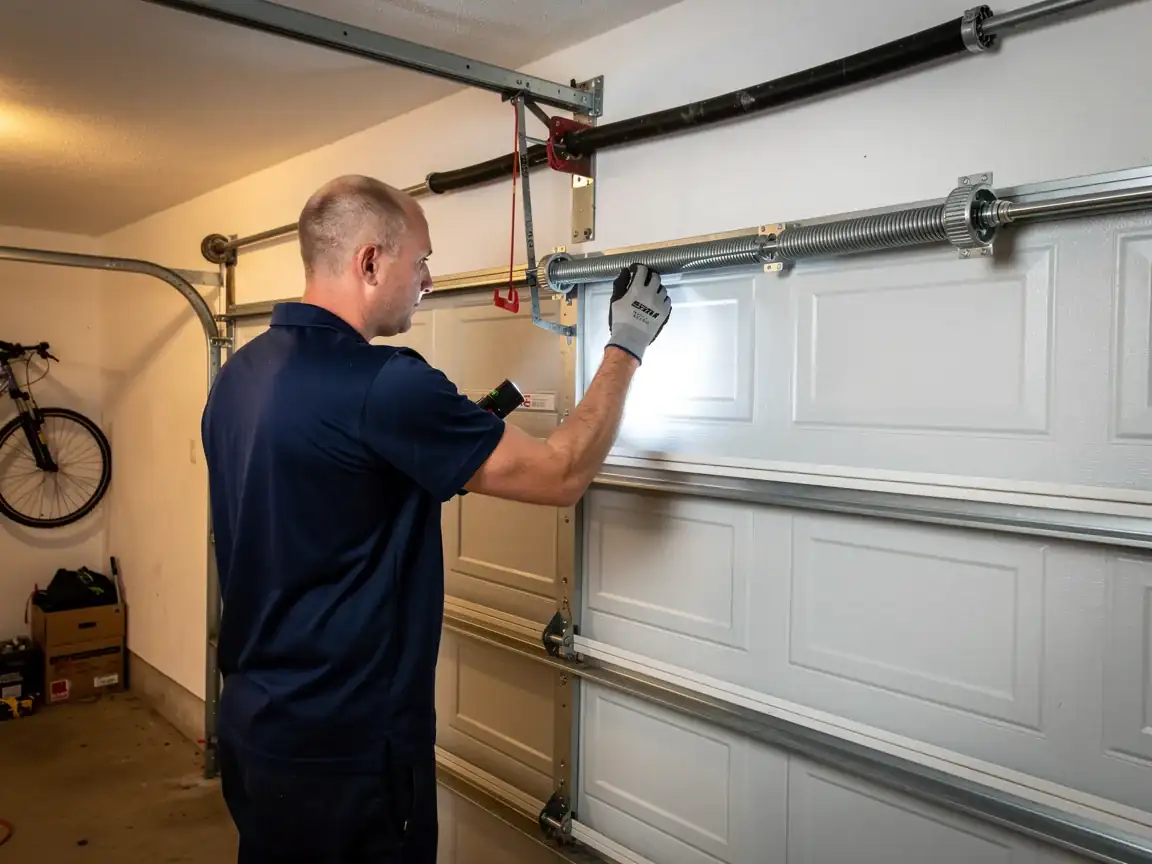
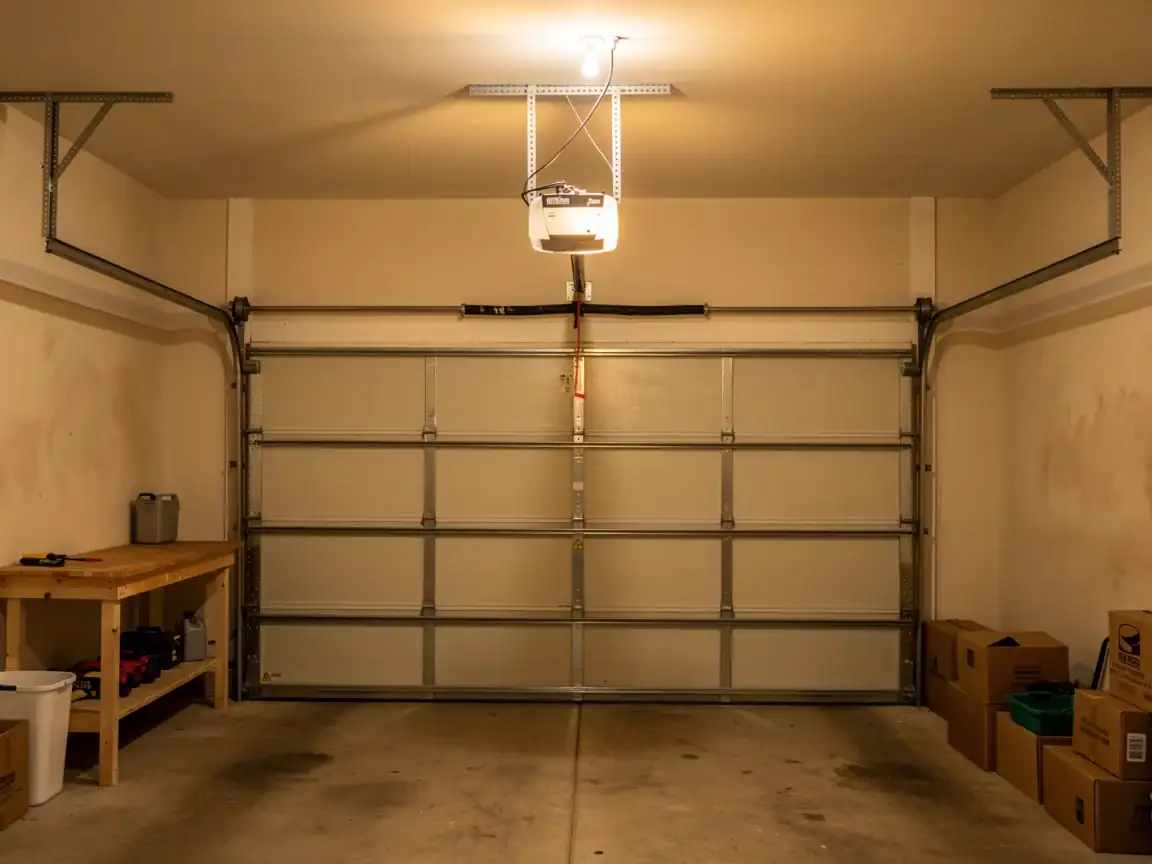
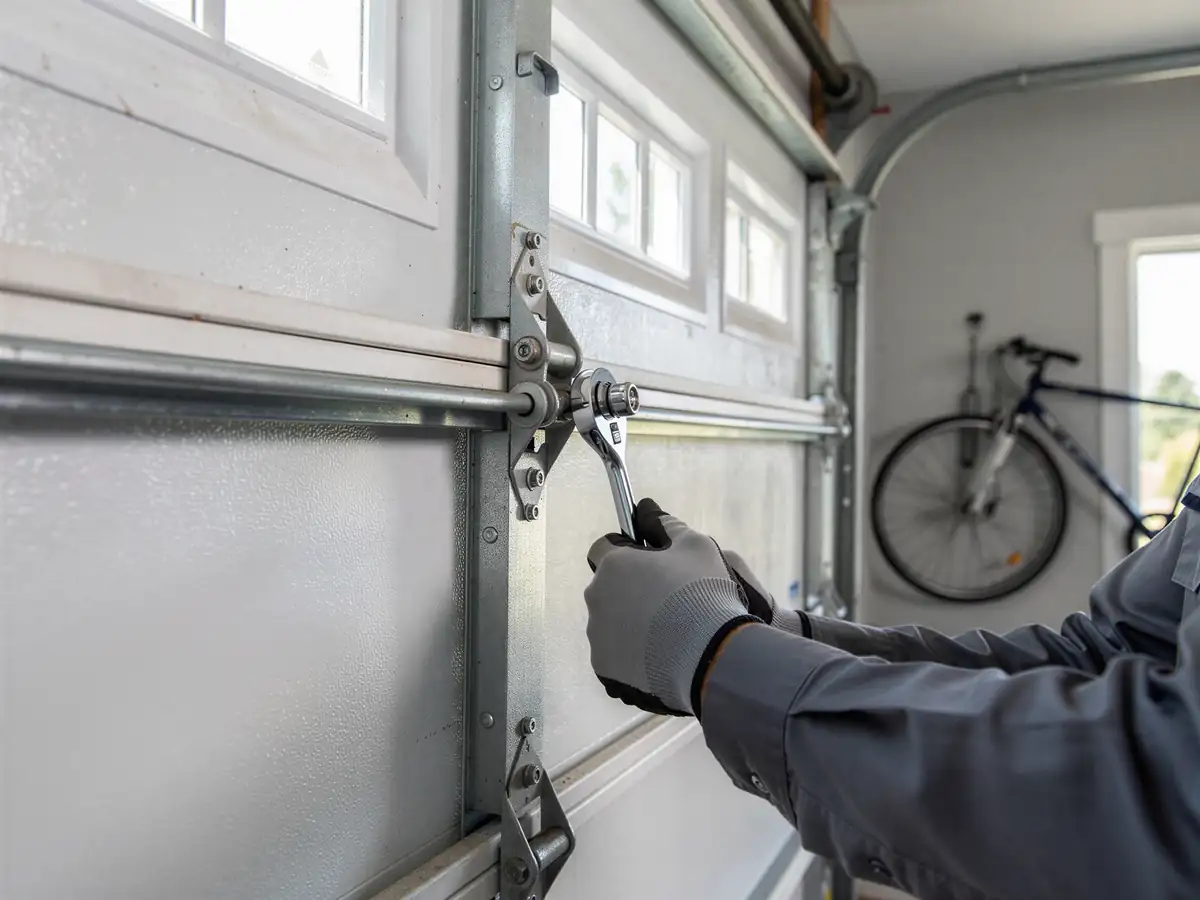
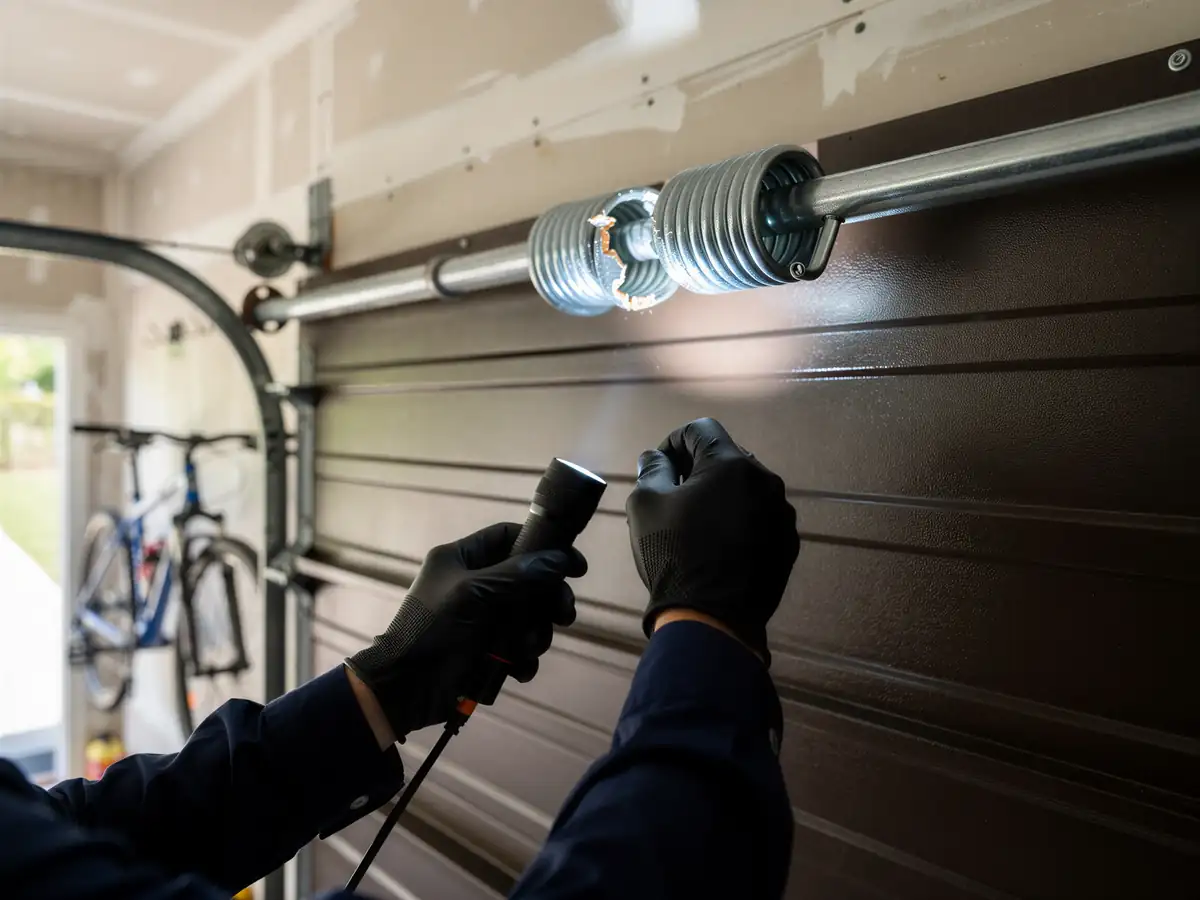
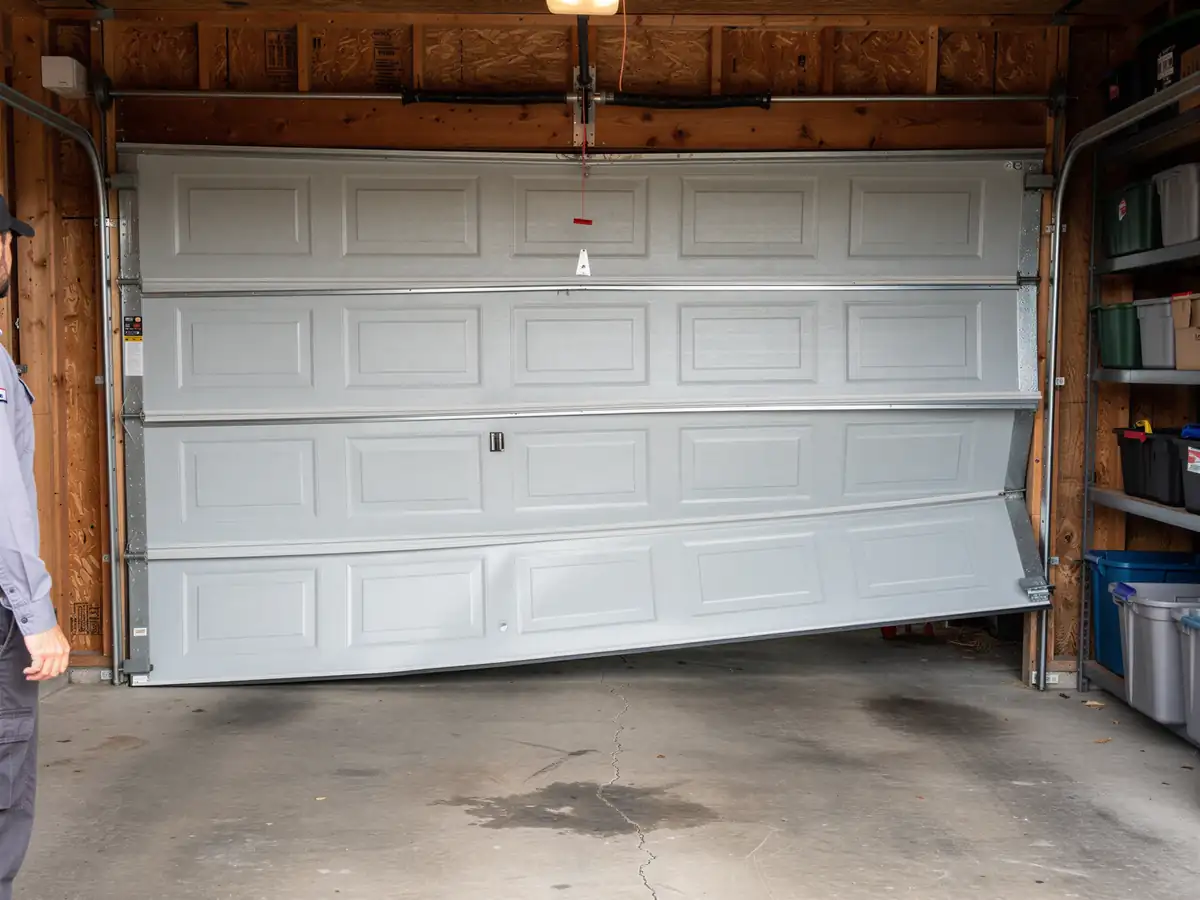
Fort Riley's housing stock runs newer than most of the towns around Manhattan - the median build year here is 2007, which means you're mostly dealing with factory-installed steel doors on galvanized track, nylon rollers, and extension or torsion springs set up to current code. That's good news for a DIYer in one sense: the hardware is consistent and the parts aren't obsolete. It's bad news in another sense, because a door this age that's jumped track usually didn't do it from wear. Something hit it, a cable snapped under tension, or a bracket was never torqued right at install. You can rehang a door that's simply slipped a roller on one side if the track isn't bent and the door still moves freely by hand with the opener disconnected. If the door is cocked, if a cable is off the drum, or if you can see a bent section of track, stop. A torsion spring under load and a door hanging unevenly on its track is how people lose fingers and end up with a door that drops the rest of the way while they're under it.
If you're not sure which situation you're in, that uncertainty is the answer. Call before you force anything back onto the rail.
Why This Fails Locally
With a median build year of 2007, most Fort Riley garage doors are still within their expected service life - this isn't the slow hardware fatigue you'd see on a 1970s door where the track brackets have worked loose over four decades. On newer construction, off-track failures tend to come from one of three things: a vehicle clipping the door or jamb, a track bracket that was never fully seated into the framing during the original build, or a cable that frayed and jumped the drum under full spring tension. None of those are rare on newer stock - framing crews move fast on new-build schedules, and a bracket that's half an inch off true doesn't show until the door's been cycled a few hundred times.
The area's winters matter here too. Cold snaps stiffen the lift cables and tighten steel panels slightly, and a door that was already borderline on an alignment issue is more likely to jump the track on a frigid morning than a mild one. We see more off-track calls in the cold months for exactly that reason - not because the door got older, but because the margin for a marginal install or a slightly bent track gets thinner when everything is stiff.
How to Book
We're based in Manhattan and run the 12-mile stretch out to Fort Riley regularly
It's a short haul, not a special trip, so there's no premium added for the distance. Call and tell us what the door is doing: which side it's off on, whether it moved recently or has been stuck like this, and whether you heard a bang or a snap before it happened. That tells us whether to bring spring stock, a full cable set, or just rollers and a level.
We don't keep a branch or drop-off counter in Fort Riley itself
Everything runs out of the Manhattan shop, truck-stocked for the job based on what you tell us on the phone. If you can get a photo of the track and send it ahead, that helps us load the right parts the first time instead of a second trip.
What You Pay
We don't have a flat number to quote here because the fix depends entirely on what failed - a roller popped out of track is a different bill than a bent rail or a snapped cable that let the door fall off true. What we can tell you is that most off-track calls fall into one of those three categories, and the newer, more standardized hardware common in Fort Riley homes tends to make parts sourcing straightforward - we're not hunting down an obsolete bracket size from a 1970s build.
We'll always look at the door in person before quoting a number, because an off-track door can look like a five-minute roller fix and turn out to be a bent track that needs replacing, or the reverse. If the track is bent badly enough, replacing that section costs less in the long run than trying to hammer it straight and have it jump again in six months.
How Long You Are Without the Door
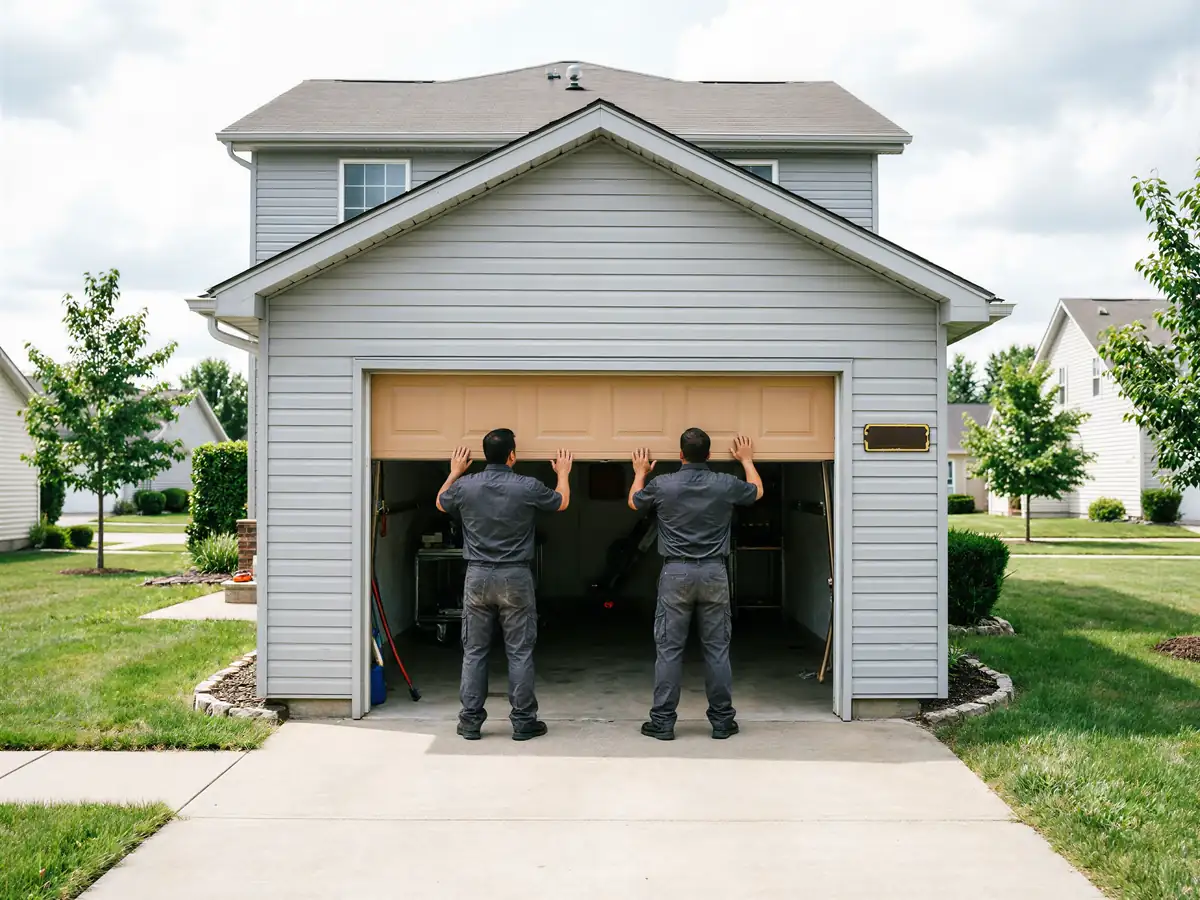
Most off-track jobs we see - a dropped roller, a cable off the drum, a minor bracket adjustment - get the door back on track and cycling normally the same visit. What extends the job is a bent track section or a spring that let go at the same time the door jumped; that's more parts and more time on site, sometimes meaning the door sits non-operational until we can get back out with the right length of rail or the correct spring size.
One honest limitation: if your door uses an odd-width track or a non-standard spring size that isn't something we stock on the truck, we may need to order it, which can mean leaving the door manually secured for a day or two rather than fully operational. That's uncommon with newer, standardized builds like most of what's out in Fort Riley, but it happens.