How Long You Are Without the Door
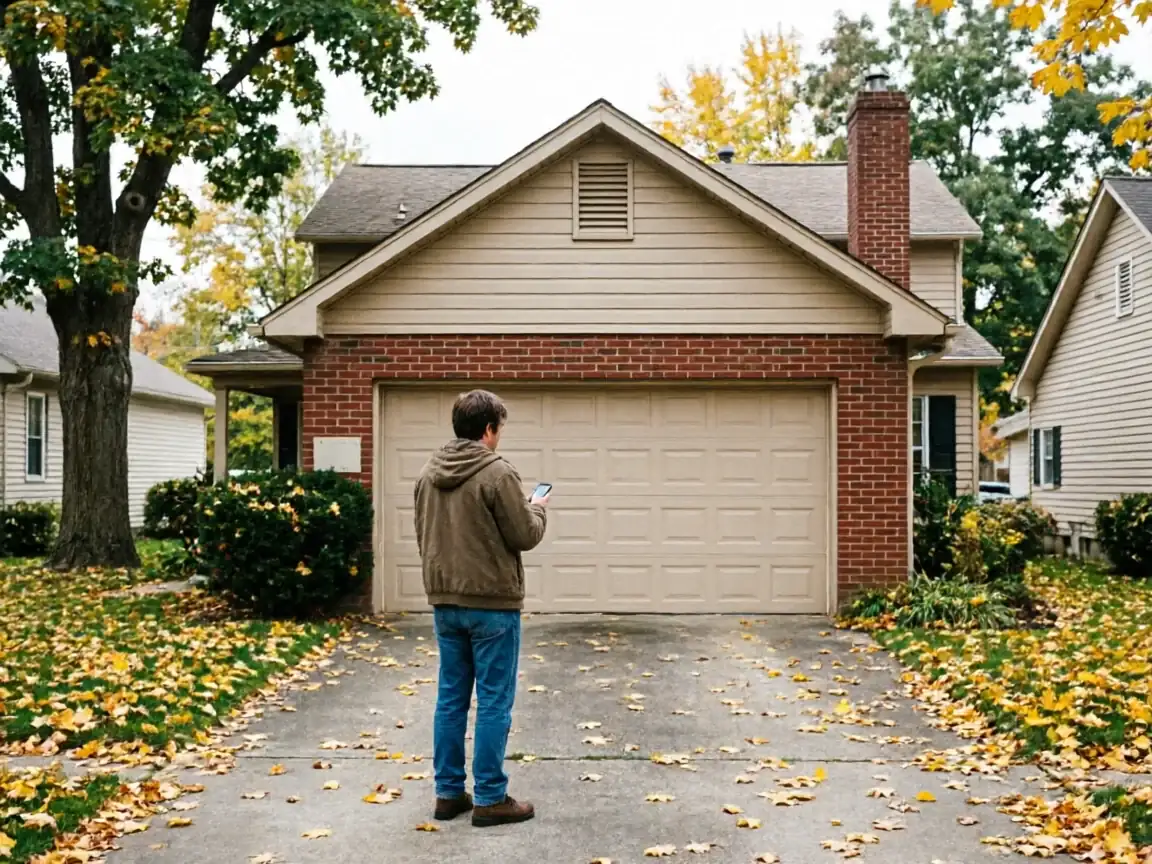
We're not based in Wamego - we come from Manhattan, 16 miles out, so the first thing to know is that an off-track call here isn't a same-block job. We don't carry a local response time to promise you, and we won't invent one. What we can tell you is that a door that's jumped track on one roller is usually a drive-out-and-fix visit, not a two-trip job, because the failure is mechanical and visible once we're looking at it. A door that's come off track on both sides, or that's bent the rail badly, takes longer because we may need to confirm what track width and gauge your house actually has before we load the truck with the right parts. If you can tell us whether it's one side or both when you call, it saves a trip.
What You Are Seeing
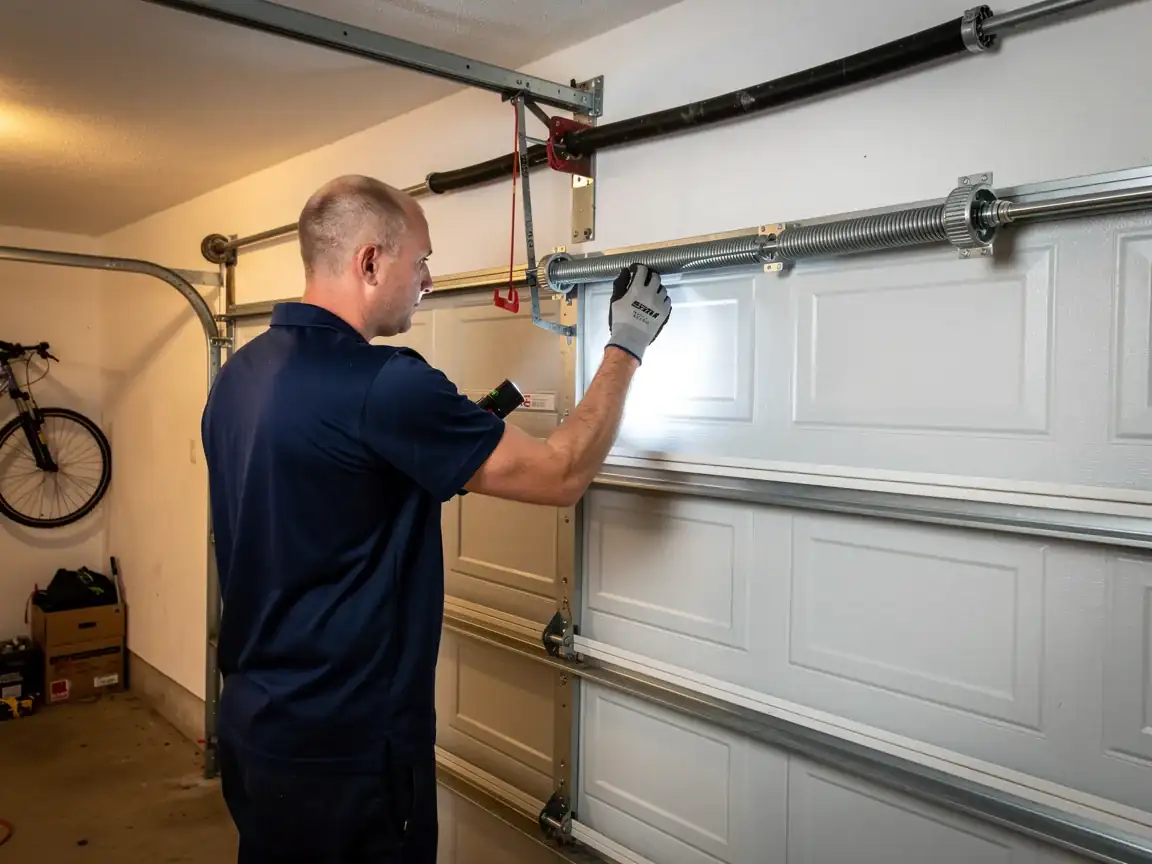
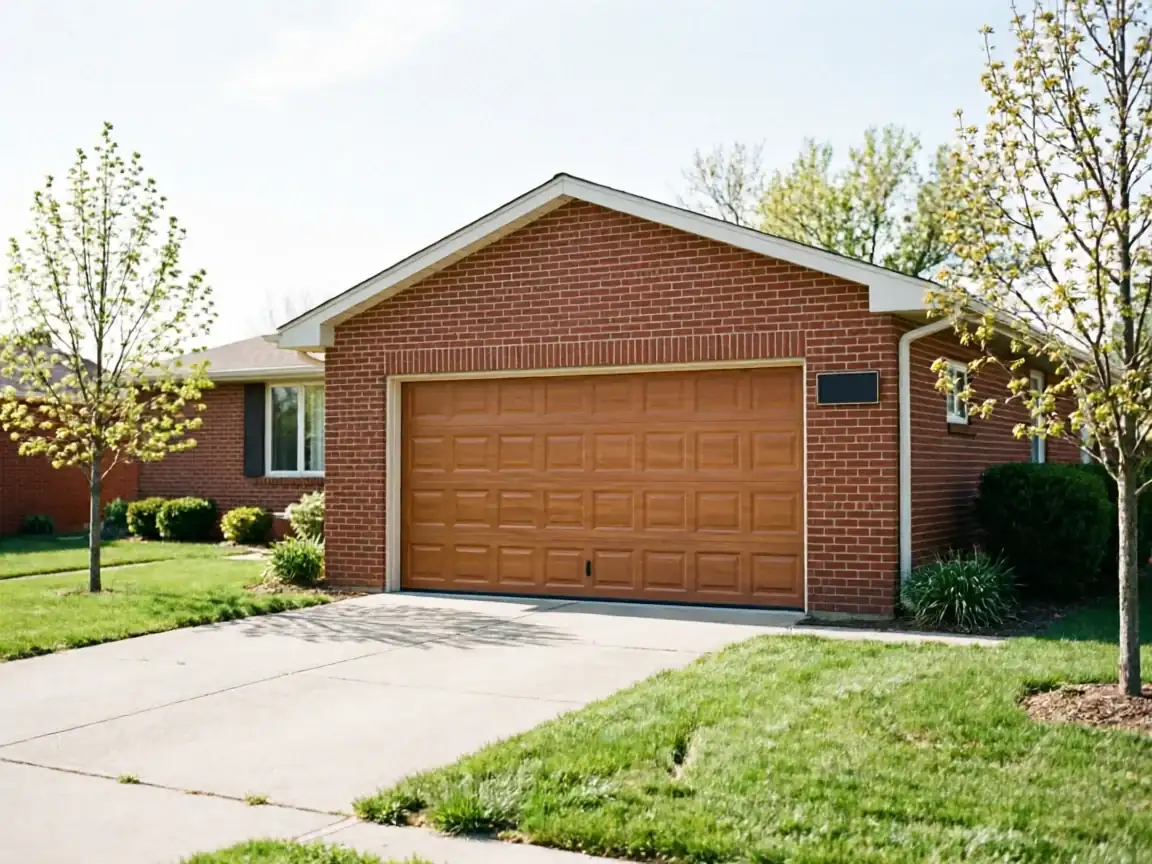
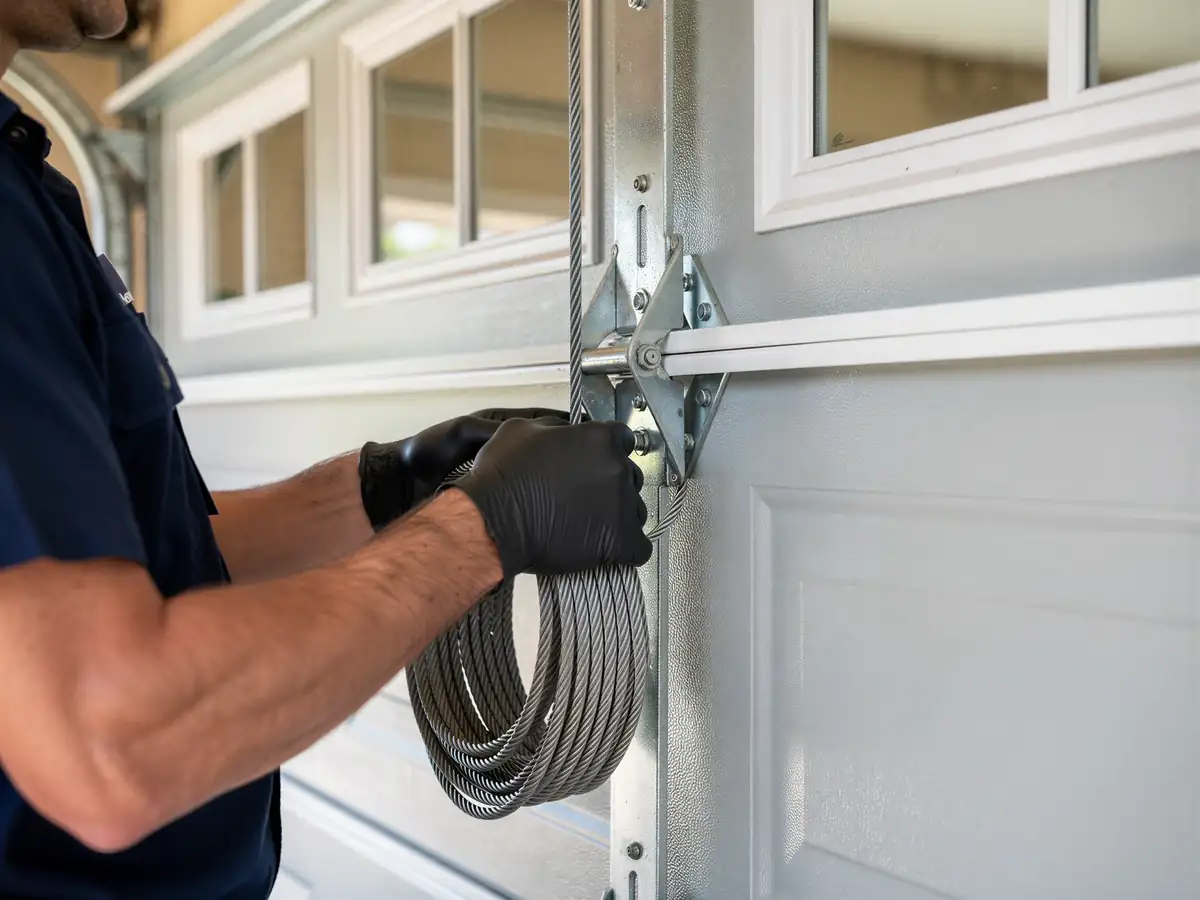
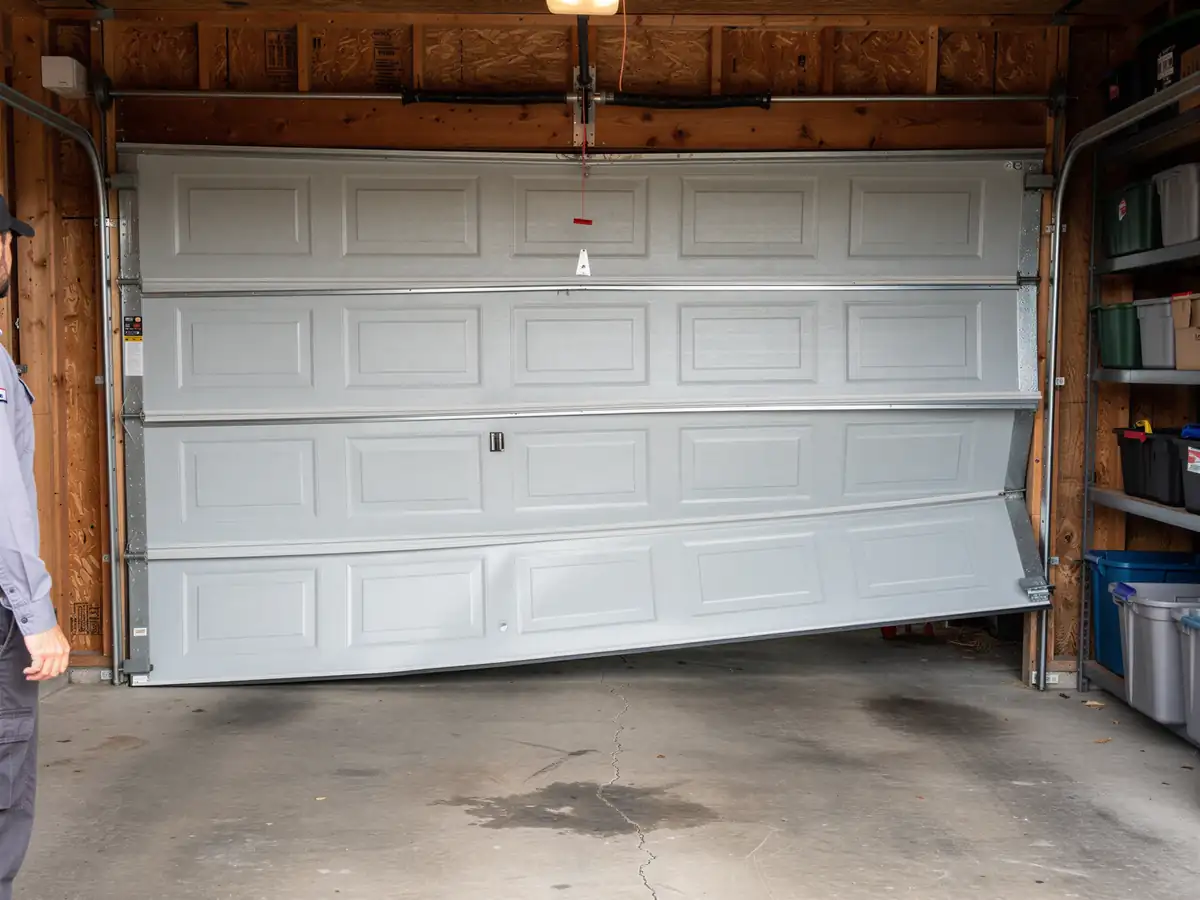
Most houses around Wamego went up near 1972, and that year matters more than people think. Builders in that era ran lightweight steel track - narrower rail, thinner gauge - paired with extension springs along the horizontal rails instead of the torsion bar over the opening. That combination comes off track more easily than later hardware, because the rail itself flexes if a roller catches or the door is forced while something's binding. If you're seeing the door hanging crooked, a gap where the roller's popped out of the channel, or the door stuck halfway with one corner lower than the other, that's the track separating from the roller, not the opener failing. The cable or spring is usually still intact at that point, which is the one piece of good news in an otherwise alarming-looking jam.
What the Fix Involves
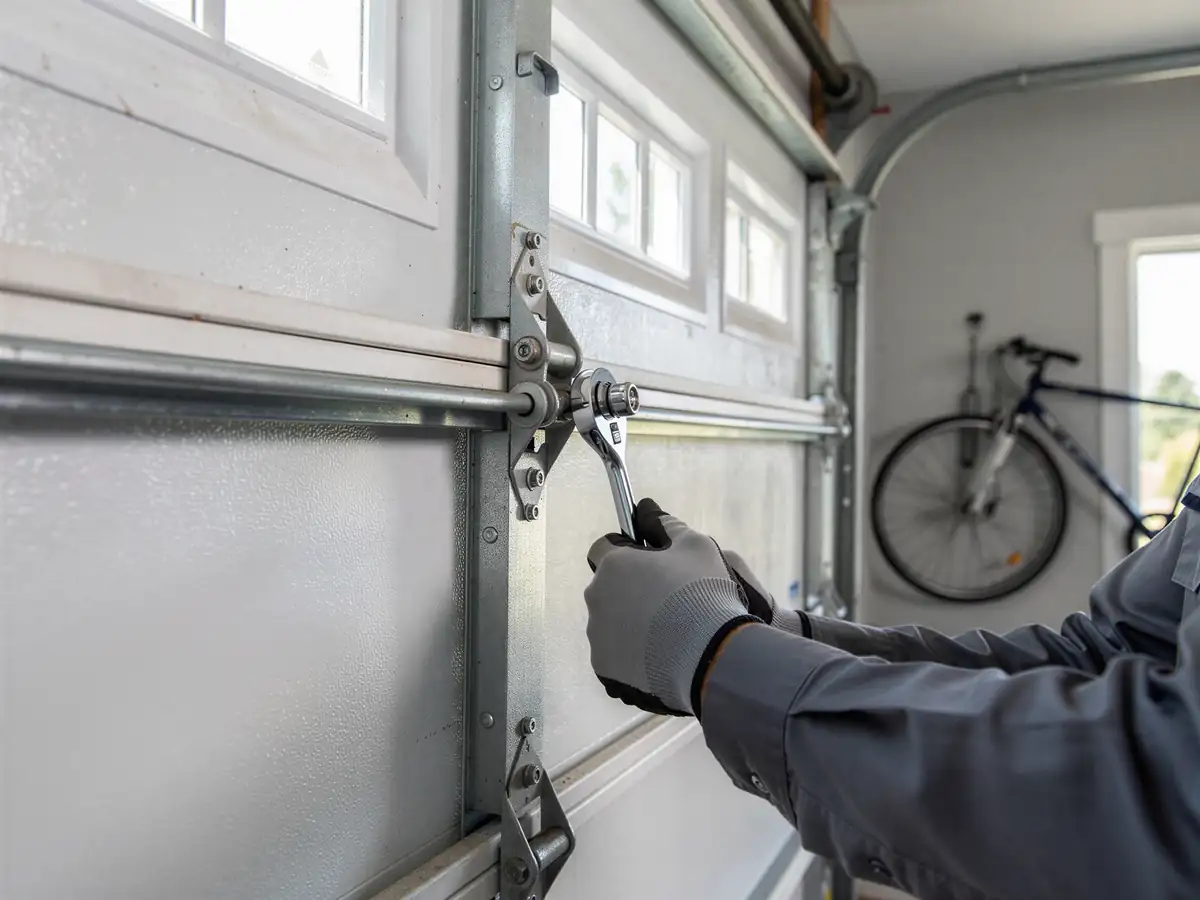
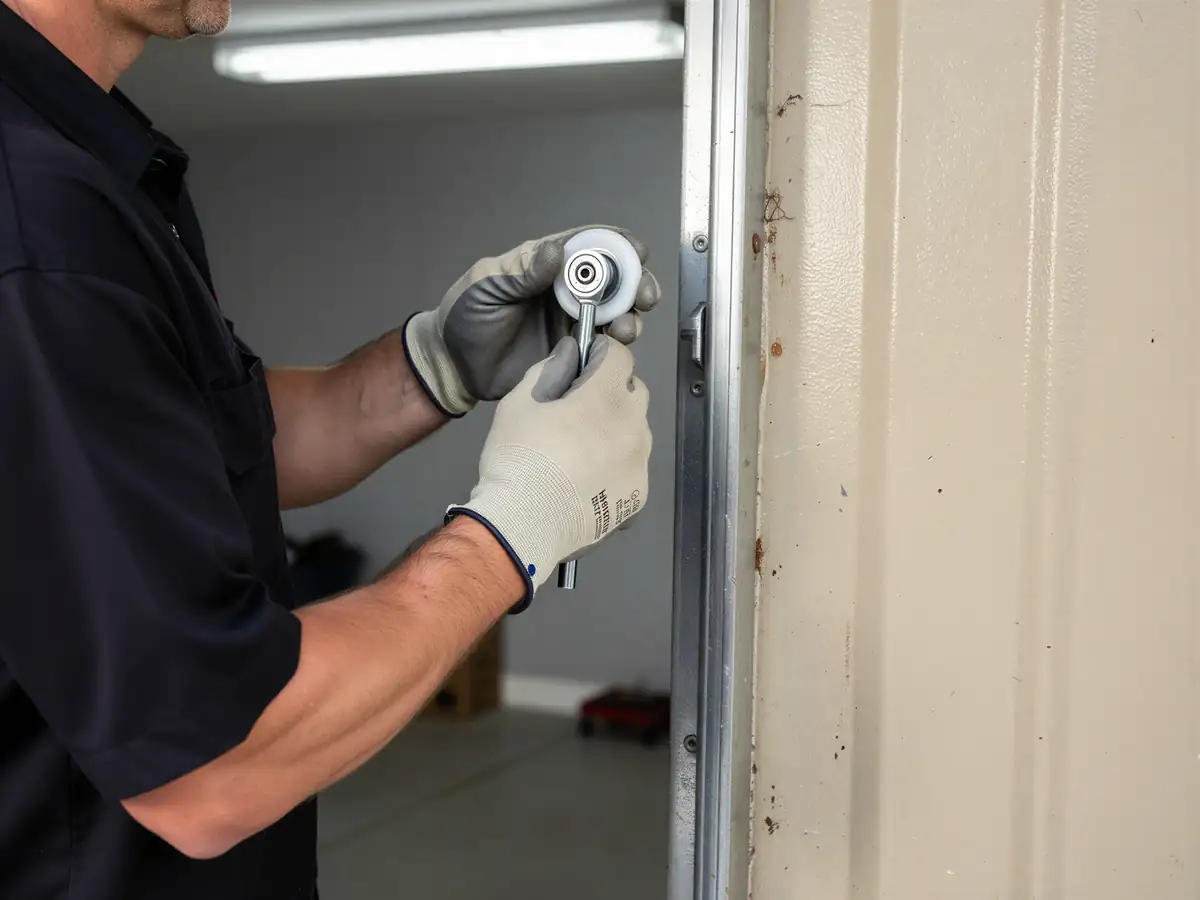
The actual repair starts with figuring out whether the track is just bent off its mounting or whether the rail itself has a kink in it. If it's mounting brackets that worked loose - common enough on houses from the early 1970s where the studs behind the jamb have had fifty years of door slams to loosen things - we reset the bracket, true up the rail with a level, and reseat the rollers. If the rail's kinked, straightening it rarely holds for long on this gauge of steel, and we'll tell you that rather than charge you for a fix that comes back. In that case the honest move is replacing the bent section rather than patching it, since a track that's already failed once under this stress is the weak point in the whole system.
Parts We Carry
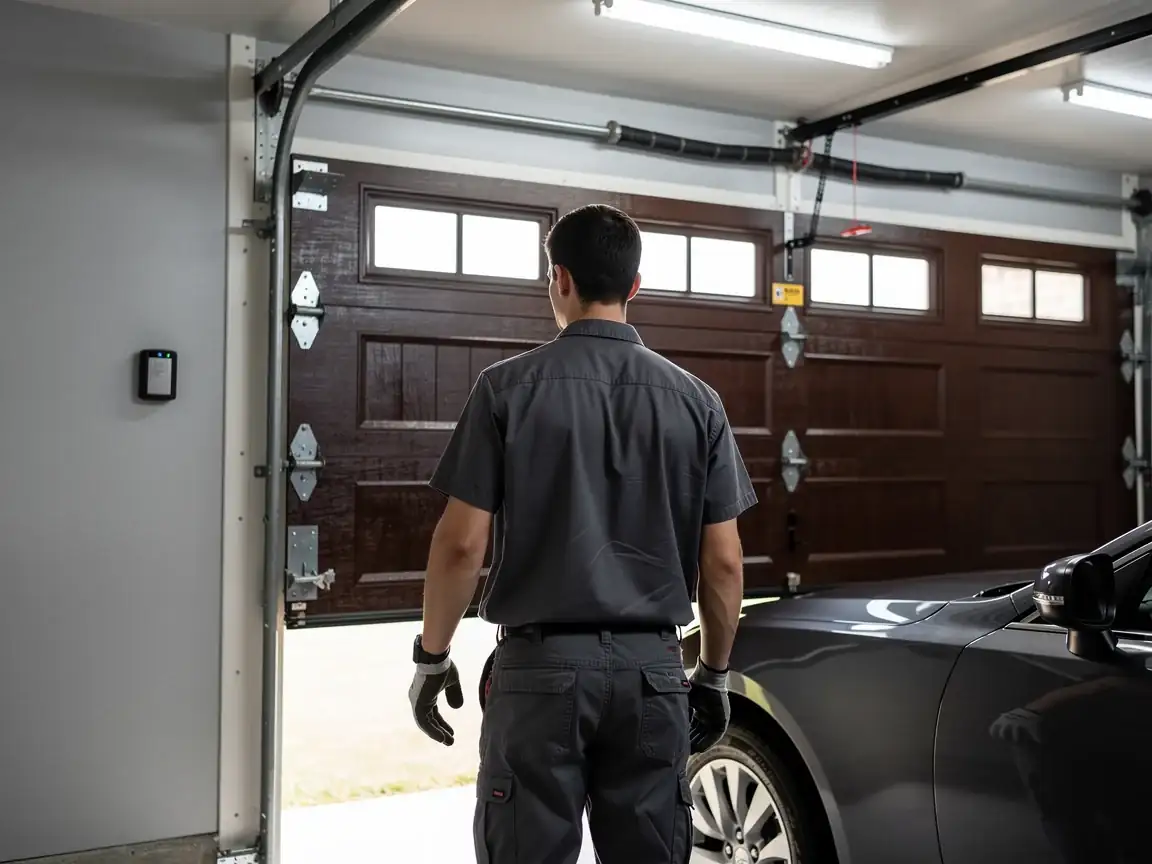
For the steel track common on Wamego's 1972-era stock, we carry standard-width rail sections, replacement roller brackets, and nylon rollers sized for that narrower channel - the stuff that actually fails on this hardware, not a generic parts bin. What we don't keep on the truck is anything custom-width or a style specific to a builder we haven't seen before; if your track turns out to be an odd gauge, that's a return trip once we've got the right stock. We'd rather tell you that up front than guess and hand you a part that doesn't seat right.