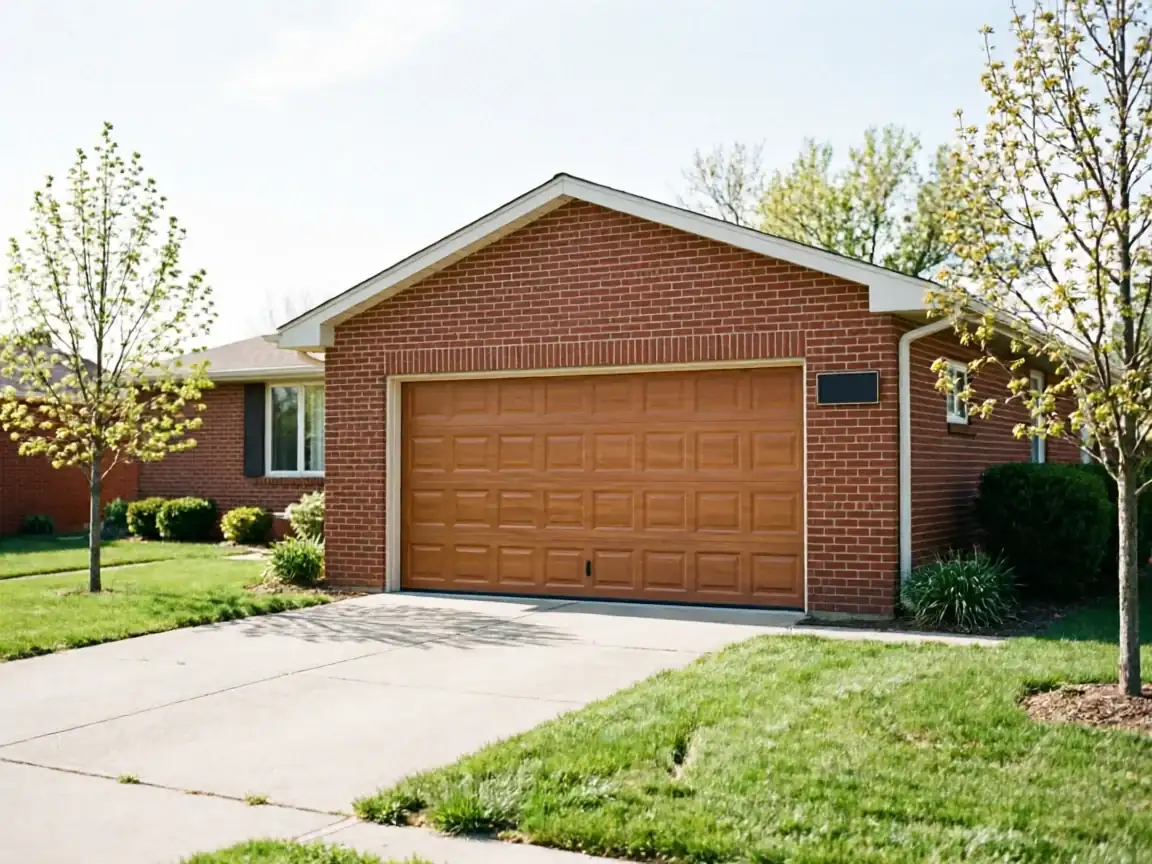
What the Fix Involves
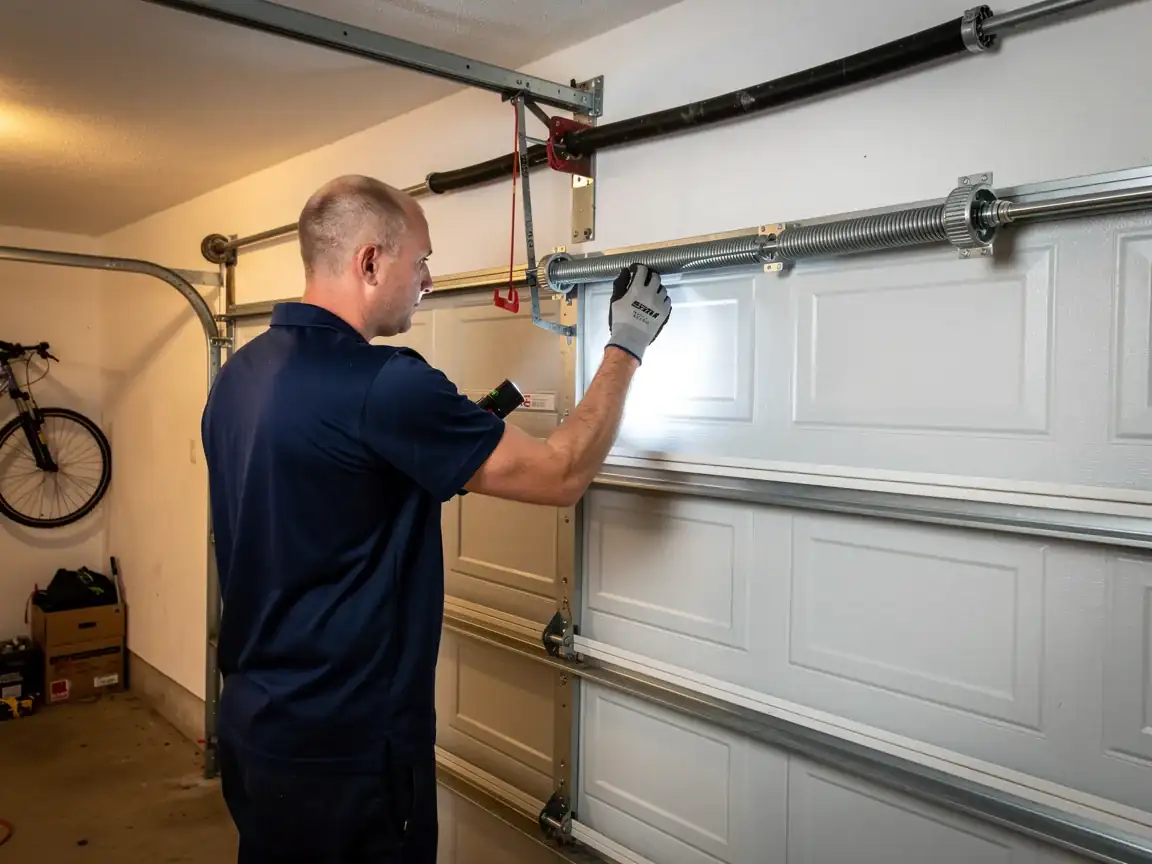
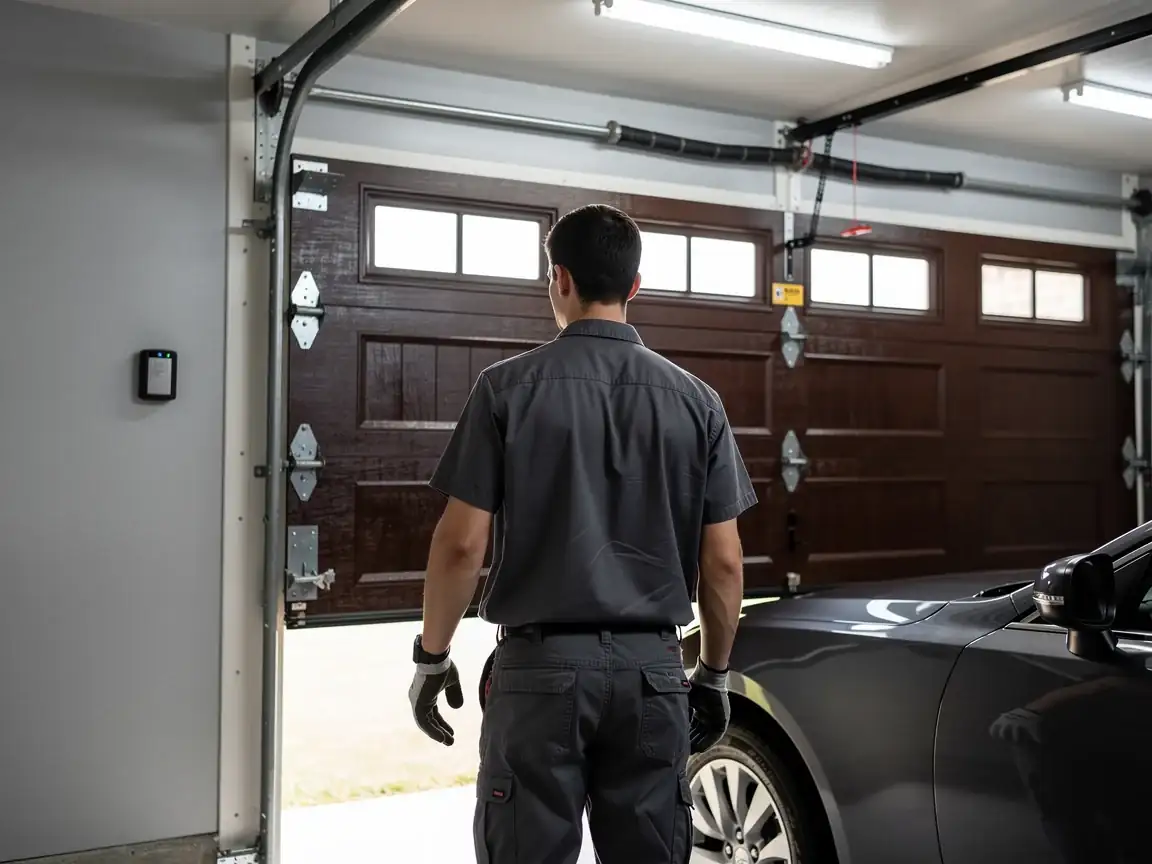
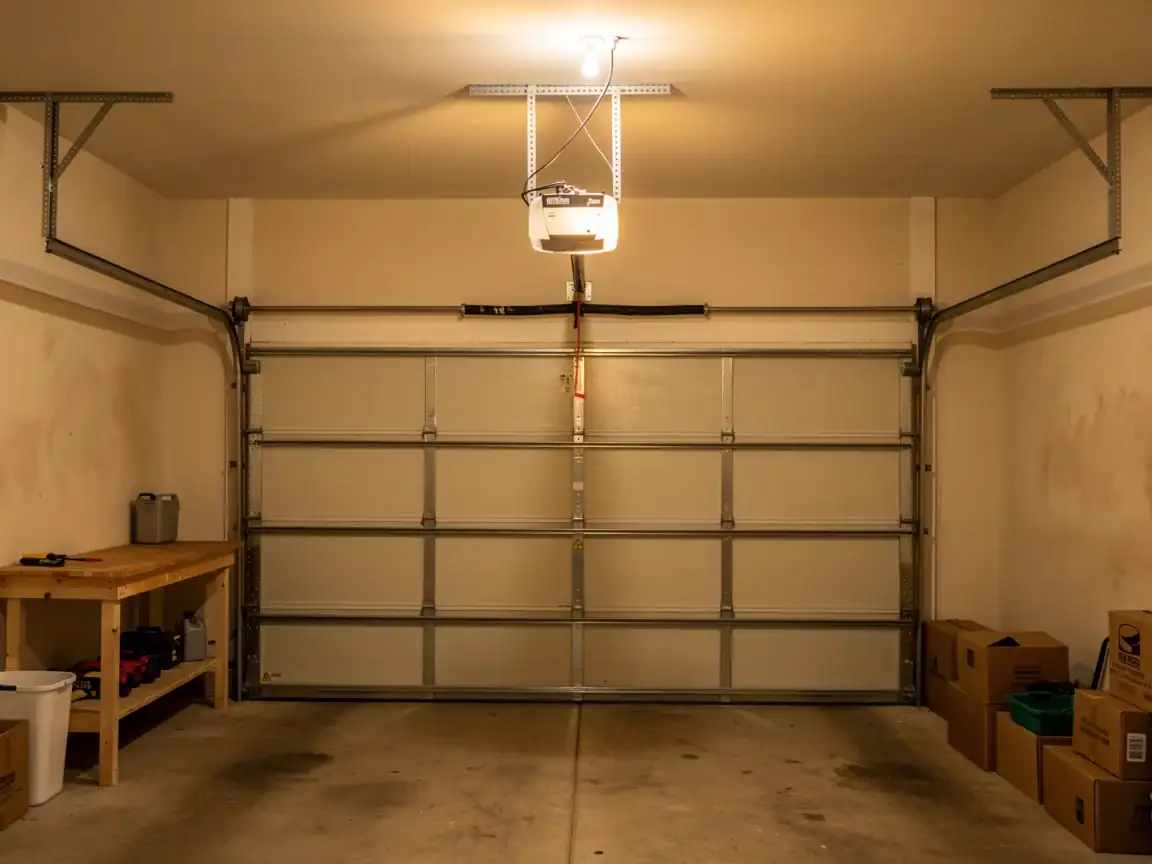
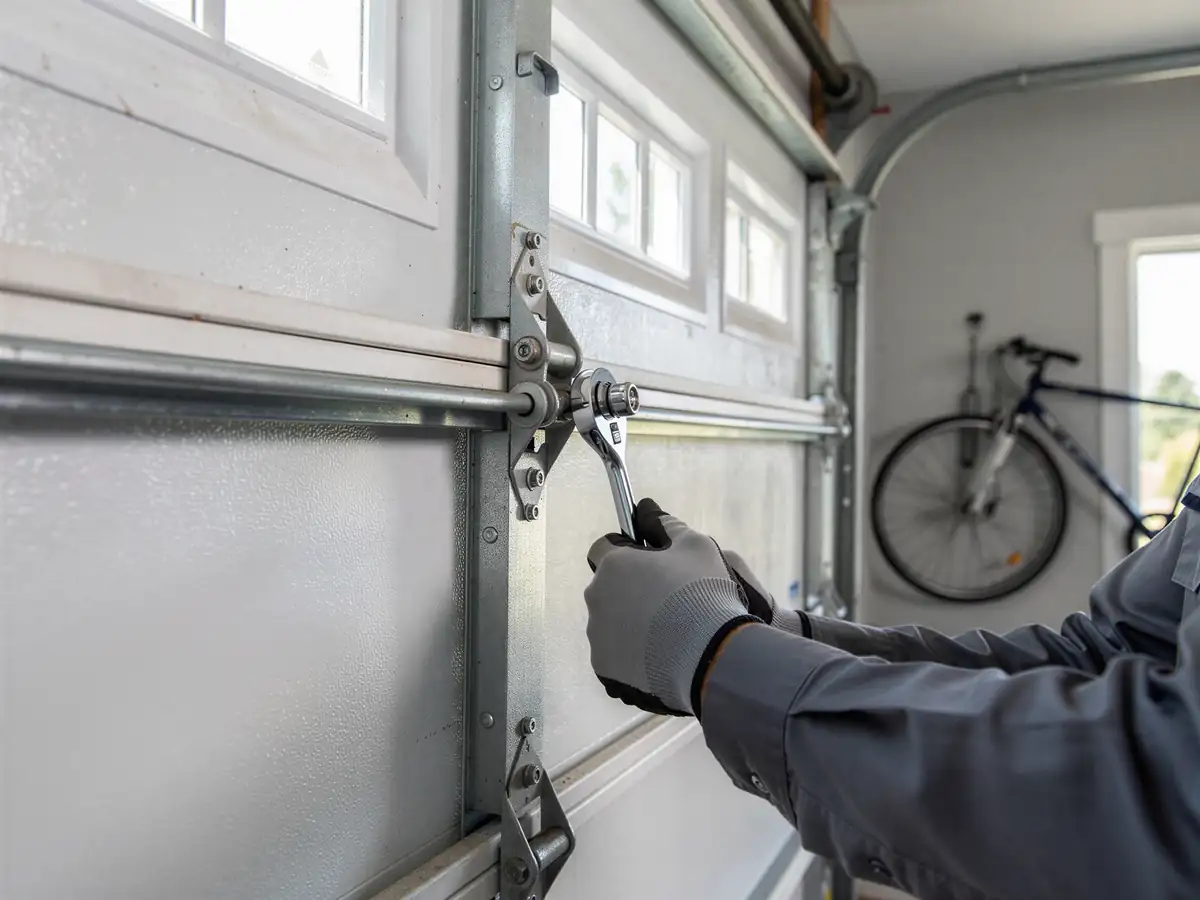
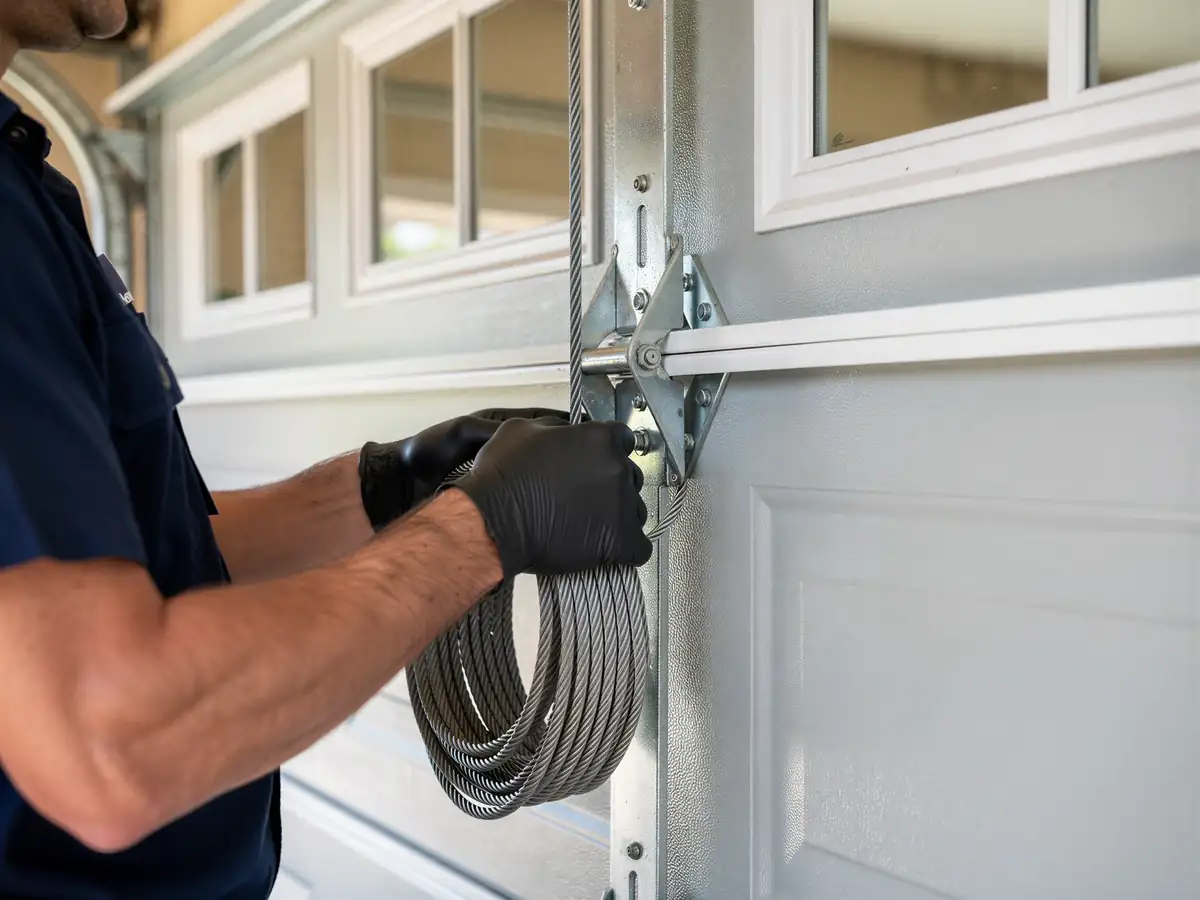
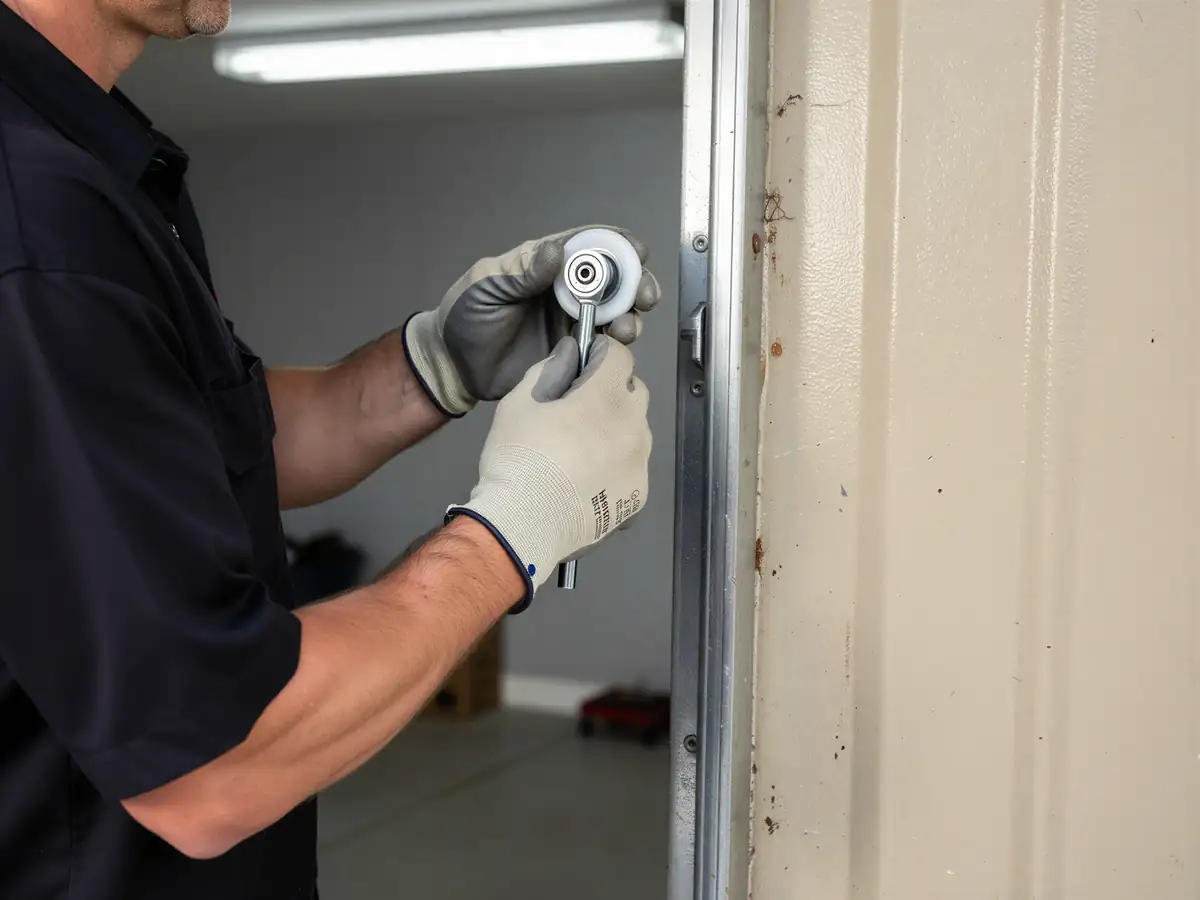
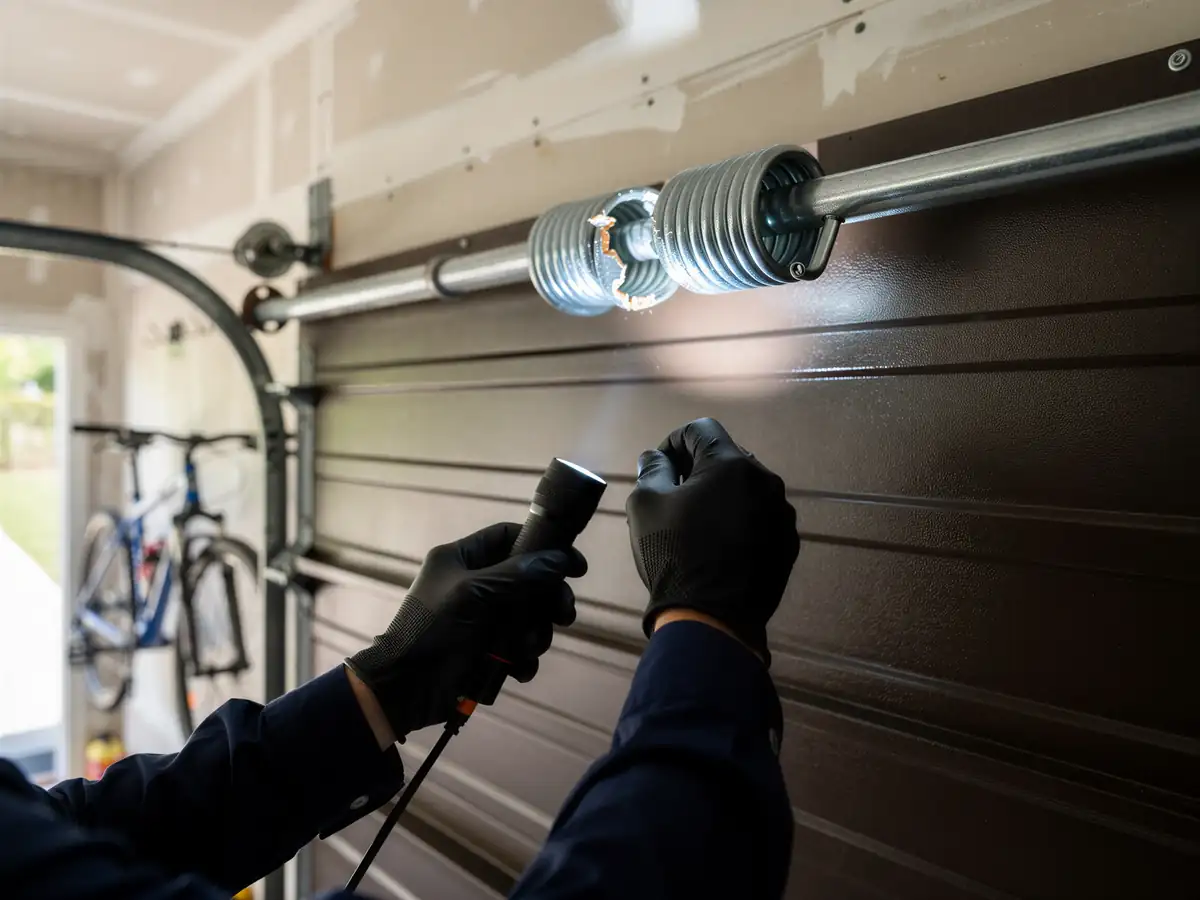
The call we get most from Westmoreland is a door that's gone heavy on one side or won't budge past the first foot of track. Houses in town went up mostly around 1972, which puts the garage hardware squarely in the extension-spring era - two springs stretched along the horizontal track rather than one torsion spring over the header. That design was standard through the 1970s, and a lot of it is still up there doing the job it was built for, minus the safety cables that later became code. When one of those springs finally lets go, or a frayed cable lets the door drop crooked, the fix is straightforward for us but not safe to improvise: matching the spring tension on both sides, running new cable through the drum properly, and checking that the track hasn't bent from years of the door riding unevenly. On a door this old we also check the rollers and the track mounting brackets, since both wear out on the same timeline as the springs.
We don't push a full door replacement on a house like this unless the panels themselves are rusted through or the track is bent past straightening - plenty of 1970s doors are worth keeping with new hardware rather than swapping the whole unit.
What You Are Seeing
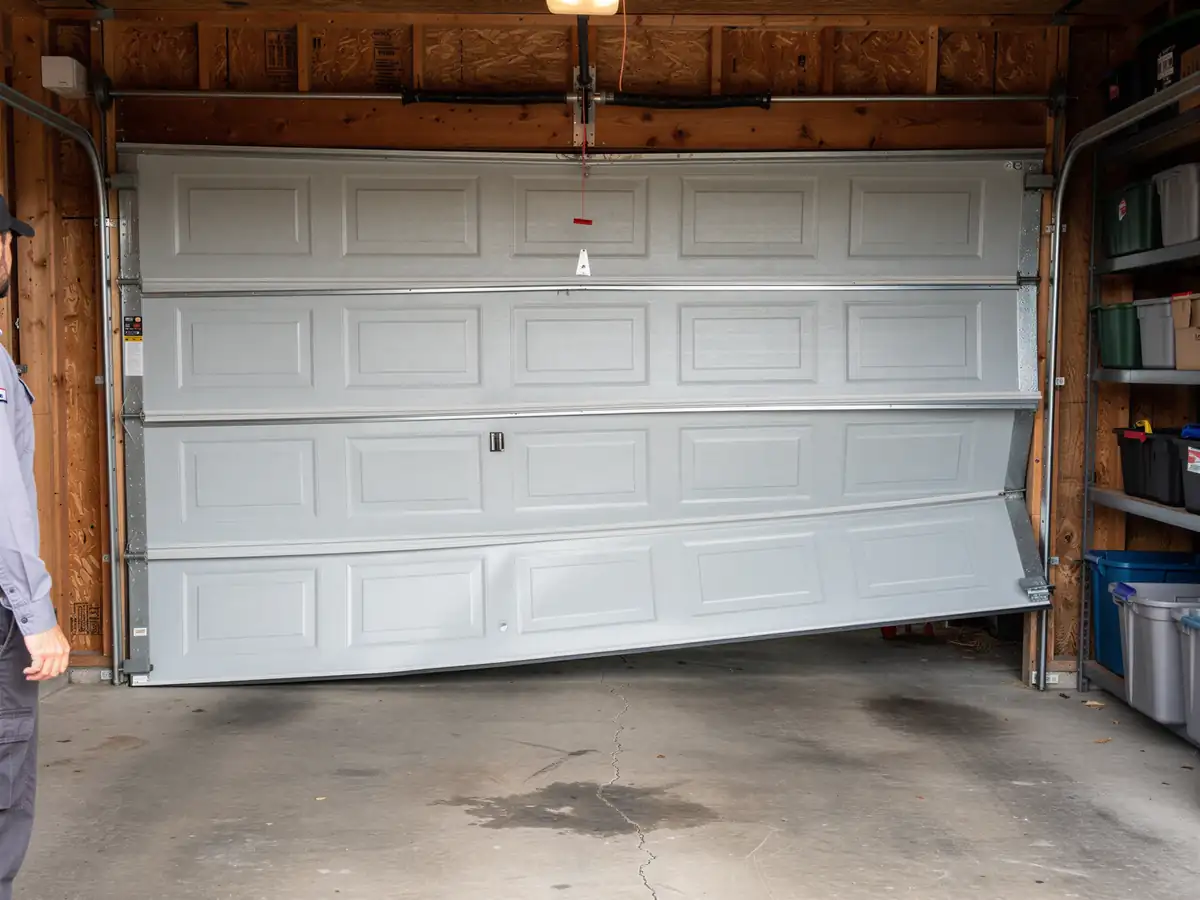
A few signs show up again and again on doors from this build period. The door looks like it's sagging at one corner when it's halfway up - that's usually one extension spring doing all the work because its partner already snapped. A loud bang from the garage followed by the door refusing to open at all is almost always a spring failure, not the opener. If the door reverses itself a few inches off the ground and won't go further, the cable on one side has likely slipped off the drum or frayed through.
On the 1972-era doors common in Westmoreland, we also see galvanized track that's pitted or slightly bowed from decades of Kansas temperature swings - the climate here runs cold and moderate enough that steel expands and contracts season to season, and track that was never quite plumb to begin with eventually shows it. None of these are opener problems, even though the opener usually gets blamed first since it's the part that visibly stops working.
How to Book
We're based in Manhattan and drive out to Westmoreland for repair and service calls
There's no local branch or drop-in counter here, so everything starts with a call or a request through the repair page below. Westmoreland is about 18 miles from our shop, further out than Ogden or Riley on our usual route, so we ask for a clear description of what the door is doing before we load the truck: whether it's stuck open, stuck closed, making noise, or sagging on one side. That tells us which springs, cables, or rollers to bring rather than making a second trip.
- 18 miles
If you've already pinned down a broken spring or a cable off the drum, mention it when you call
We stock standard extension-spring sizes for doors from this era, so most jobs get handled in one visit.
How Long You Are Without the Door
For a broken extension spring or a cable job, the door is back in working order the same visit - once we're on site with the right spring size and cable length, it's a couple hours of work, not a day. Where it stretches out is parts we don't carry on the truck: a bent track section on an older door, or a panel that's rusted through and needs to be special-ordered to match. Those jobs mean the door stays manually operated, or propped shut, until the part arrives.
We're honest about that gap up front rather than guessing at a delivery date we can't control. If the door is a safety issue in the meantime - won't stay closed, or won't stay off the ground - we'll tell you how to secure it until we're back.
Can You Do This Yourself
Changing a snapped extension spring looks simple because the spring is right there, stretched along the track where you can reach it. It isn't simple. The companion spring on the other side is still under tension, and disconnecting it wrong is how people end up with a trip to the ER instead of a fixed door. Same goes for a cable that's slipped off the drum - reseating it means working near a spring that's loaded, even if it hasn't broken yet.
What you can safely do yourself: check whether the issue is the opener (battery in the remote, sensor alignment at the bottom of the track) before assuming it's the springs, and visually check for a bent track or a panel that's pulled away from its hinges. If either spring is broken or a cable's off the drum, that's a call, not a weekend project - not because the job is mysterious, but because the hardware is holding enough force to hurt you.